

'%3e%3cpath%20d='M8%200C12.4183%200%2016%203.58172%2016%208C16%2012.4183%2012.4183%2016%208%2016C3.58172%2016%200%2012.4183%200%208C0%203.58172%203.58172%200%208%200ZM11.6162%204.38379C11.2257%203.99337%2010.5927%203.99338%2010.2021%204.38379L8%206.58594L5.79785%204.38379C5.40732%203.99334%204.77429%203.99329%204.38379%204.38379C3.99331%204.77429%203.99335%205.40733%204.38379%205.79785L6.58594%208L4.38379%2010.2021C3.99348%2010.5927%203.99341%2011.2257%204.38379%2011.6162C4.77426%2012.0066%205.40734%2012.0065%205.79785%2011.6162L8%209.41406L10.2021%2011.6162C10.5927%2012.0066%2011.2257%2012.0067%2011.6162%2011.6162C12.0067%2011.2257%2012.0066%2010.5927%2011.6162%2010.2021L9.41406%208L11.6162%205.79785C12.0066%205.40735%2012.0066%204.77429%2011.6162%204.38379Z'%20fill='%23080E17'%20fill-opacity='0.46'/%3e%3c/g%3e%3cdefs%3e%3cclipPath%20id='clip0_3761_713'%3e%3crect%20width='16'%20height='16'%20fill='white'/%3e%3c/clipPath%3e%3c/defs%3e%3c/svg%3e)



'%3e%3cpath%20fill-rule='evenodd'%20clip-rule='evenodd'%20d='M21.4999%2010.9993C21.4999%205.20009%2016.7986%200.498901%2010.9993%200.498901C5.19994%200.498901%200.498657%205.20009%200.498657%2010.9993C0.498657%2016.2404%204.33858%2020.5844%209.35855%2021.3722V14.0346H6.69238V10.9993H9.35855V8.68594C9.35855%206.05427%2010.9262%204.60062%2013.3248%204.60062C14.4736%204.60062%2015.6753%204.80571%2015.6753%204.80571V7.38979H14.3512C13.0468%207.38979%2012.64%208.19921%2012.64%209.0296V10.9993H15.5523L15.0867%2014.0346H12.64V21.3722C17.66%2020.5844%2021.4999%2016.2404%2021.4999%2010.9993Z'%20fill='%231568EA'/%3e%3c/g%3e%3c/svg%3e)


'%3e%3cpath%20d='M2.42045%2022.1876H6.31818V12.7217L0.75%208.54553V20.5171C0.75%2021.4414%201.49892%2022.1876%202.42045%2022.1876Z'%20fill='%234285F4'/%3e%3cpath%20d='M19.682%2022.1876H23.5797C24.5041%2022.1876%2025.2502%2021.4387%2025.2502%2020.5171V8.54553L19.682%2012.7217'%20fill='%2334A853'/%3e%3cpath%20d='M19.682%205.48293V12.7216L25.2502%208.54543V6.31816C25.2502%204.25236%2022.8921%203.07469%2021.2411%204.31361'%20fill='%23FBBC04'/%3e%3cpath%20d='M6.31824%2012.7217V5.48303L13.0001%2010.4944L19.6819%205.48303V12.7217L13.0001%2017.733'%20fill='%23EA4335'/%3e%3cpath%20d='M0.75%206.31816V8.54543L6.31818%2012.7216V5.48293L4.75909%204.31361C3.10534%203.07469%200.75%204.25236%200.75%206.31816Z'%20fill='%23C5221F'/%3e%3c/g%3e%3cdefs%3e%3cclipPath%20id='clip0_2954_7305'%3e%3crect%20width='24.5'%20height='18.375'%20fill='white'%20transform='translate(0.75%203.8125)'/%3e%3c/clipPath%3e%3c/defs%3e%3c/svg%3e)


Choosing an office suite today involves much more than deciding where you'll write documents or build spreadsheets. You also need to consider pricing, collaboration, AI-powered productivity, PDF capabilities, file compatibility, and how well the software fits the way you work.
Microsoft 365 has long been the standard choice for businesses and organizations thanks to its productivity ecosystem, cloud services, and collaboration tools. At the same time, WPS Office has become a strong alternative for users looking for a familiar experience, broad Microsoft Office compatibility, integrated PDF tools, and a lower total cost.
The good news is that both office suites can handle everyday productivity tasks such as creating documents, analyzing spreadsheets, designing presentations, and working across multiple devices. The differences become more apparent when you compare pricing, collaboration, advanced features, and the overall workflow.
In this guide, we'll compare WPS Office and Microsoft 365 across the areas that matter most — including usability, features, AI capabilities, PDF editing, pricing, MS Office compatibility, collaboration, and performance — so you can choose the office suite that best matches your needs.
Quick Summary
WPS Office is the better choice for students, freelancers, home users, and many small businesses looking for an affordable office suite with Microsoft Office compatibility, integrated PDF tools, and cross-platform support.
Microsoft 365 is the stronger option for organizations that depend on Microsoft Teams, SharePoint, enterprise administration, and advanced collaboration across large teams.
For most everyday productivity tasks, both suites can create and edit Word documents, spreadsheets, and presentations. Your decision comes down to whether you value cost and simplicity or enterprise collaboration and the Microsoft ecosystem.
Recommendation
If your work primarily involves creating, editing, sharing, and converting documents, WPS Office delivers excellent value. If your organization relies heavily on Microsoft's collaboration ecosystem, Microsoft 365 remains the more comprehensive solution.
Why This Comparison Matters
Not every user needs the same office suite. Everyone has different feature and productivity requirements.
| Compare | WPS Office | Microsoft 365 |
|---|---|---|
| Best for | Students, freelancers, home users, SMBs | Businesses and enterprises |
| Pricing | Free plan with optional premium upgrades | Subscription-based |
| Microsoft file compatibility | Excellent | Native |
| Built-in PDF tools | Integrated | Basic PDF support; additional Microsoft services/workflows for advanced needs |
| AI features | WPS AI | Microsoft Copilot (eligible plans) |
| Collaboration | Good for individuals and small teams | Excellent for organizations |
| Linux support | Yes | Limited / not a primary desktop focus |
That's why we'll evaluate each product based on the questions real users ask before choosing an office suite:
Which one offers better value for money?
Which is easier to use?
Which works best with Microsoft Office files?
Which includes the most useful productivity features?
Which is better for collaboration?
Which is the better long-term choice for my workflow?
By the end of this comparison, you'll have a clear understanding of where each office suite excels and which one is the better fit for your specific needs.
What We'll Compare
To make the comparison practical, we'll evaluate both office suites across seven decision factors:
User experience and ease of use
Core productivity features
AI and PDF capabilities
Pricing and overall value
Collaboration and security
File compatibility and platform support
Which office suite is best for different types of users
Rather than focusing on technical specifications alone, each section explains how these differences affect everyday productivity, helping you choose the solution that aligns with the way you work.
User Experience and Core Features
For most users, the best office suite isn't necessarily the one with the longest feature list — it's the one that helps them work efficiently every day.
Both WPS Office and Microsoft 365 include the core productivity tools most people expect, including document editing, spreadsheets, presentations, cloud access, and mobile apps. The difference lies in how these tools fit into your workflow and whether you need enterprise-level capabilities or a streamlined experience for everyday tasks.
A Familiar Interface with Different Priorities
If you've used Microsoft Office before, you'll feel comfortable with both platforms.
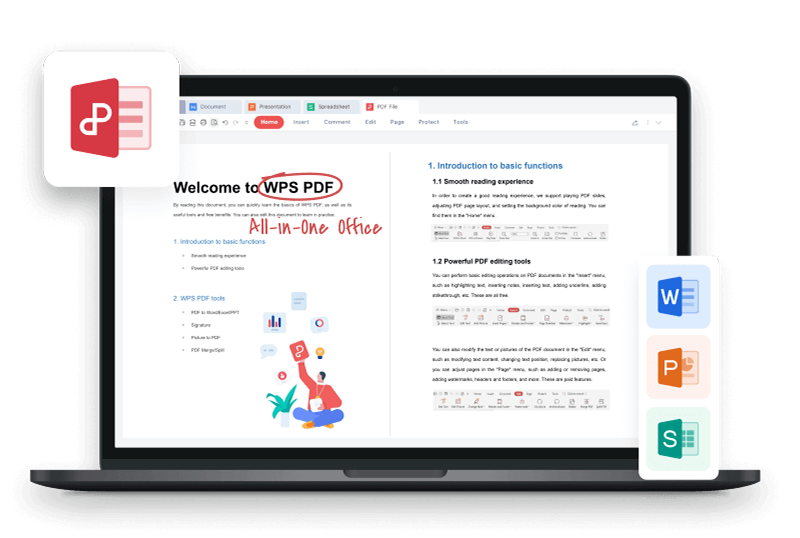
WPS Office adopts a ribbon-style interface that's intentionally familiar, helping users transition with little to no learning curve. Common tools are easy to find, menus follow familiar conventions, and users can begin editing documents immediately without adapting to a completely new layout.
Microsoft 365 also uses the familiar ribbon interface, but places greater emphasis on integration with Microsoft's wider ecosystem. Features such as OneDrive, Teams, Outlook, and SharePoint are closely connected, making it easier for organizations to move between communication, collaboration, and document management within a single environment.
For individual users, the overall editing experience is similar. The biggest difference is that WPS Office focuses on keeping productivity simple, while Microsoft 365 is designed to support more complex organizational workflows.
Core Productivity Tools
Both office suites include the essential applications required for everyday work. For most users, these applications provide everything needed to create reports, edit documents, analyze spreadsheets, prepare presentations, and share files across devices. Where they begin to differ is in the surrounding productivity experience.
| Productivity Task | WPS Office | Microsoft 365 |
|---|---|---|
| Word processing | ✓ Writer | ✓ Word |
| Spreadsheets | ✓ Spreadsheet | ✓ Excel |
| Presentations | ✓ Presentation | ✓ PowerPoint |
| Cloud storage | ✓ WPS Cloud | ✓ OneDrive |
| Mobile apps / web | ✓ Mobile + web | ✓ Mobile + web |
Everyday Workflow
One advantage of WPS Office is that it brings document editing, presentations, spreadsheets, and PDF tools into a more unified workspace. For example, if you're reviewing a proposal, making edits to a Word document, converting it to PDF, and sharing the final version, you can complete much of that workflow without switching between multiple applications.
Microsoft 365 follows a more modular approach. Individual applications such as Word, Excel, PowerPoint, Outlook, Teams, and OneDrive each play a dedicated role within the Microsoft ecosystem. This structure works particularly well for organizations where multiple teams collaborate across different services. Neither approach is inherently better — they simply suit different working styles.
Templates and Productivity Resources
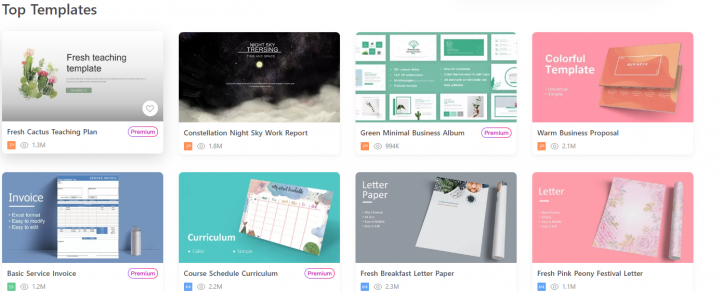
Templates can significantly reduce the time needed to create professional documents. Both WPS Office and Microsoft 365 provide templates for common business and personal use cases, including:
Reports
Resumes
Invoices
Budgets
Project plans
Presentations
Calendars
For users who regularly create recurring documents, these ready-made templates help improve consistency while reducing repetitive formatting work.
Which One Feels Easier to Use?
If you're switching from Microsoft Office, you'll find both platforms familiar. However, the experience each one is designed to deliver is slightly different.
WPS Office prioritizes:
Quick onboarding
A familiar interface
Lightweight productivity
Everyday document workflows
Microsoft 365 prioritizes:
Connected business applications
Enterprise collaboration
Organizational productivity
Cloud-first workflows
This distinction becomes more noticeable as your workflow grows beyond creating documents and into managing teams, permissions, and shared workspaces.
My Recommendation
Choose WPS Office if you want a familiar interface, integrated document and PDF workflows, and a productivity suite that's easy to adopt without unnecessary complexity.
Choose Microsoft 365 if your daily work depends on Microsoft's broader collaboration ecosystem or advanced enterprise workflows.
Pricing and Overall Value
Price is often the first comparison many users make — but it shouldn't be the only one. A better question is: Which office suite delivers the best value for the way you work?
Both WPS Office and Microsoft 365 provide the core productivity tools needed to create documents, spreadsheets, and presentations. The difference lies in how they're packaged, what additional capabilities are included, and whether those extra features justify the ongoing cost.
WPS Office
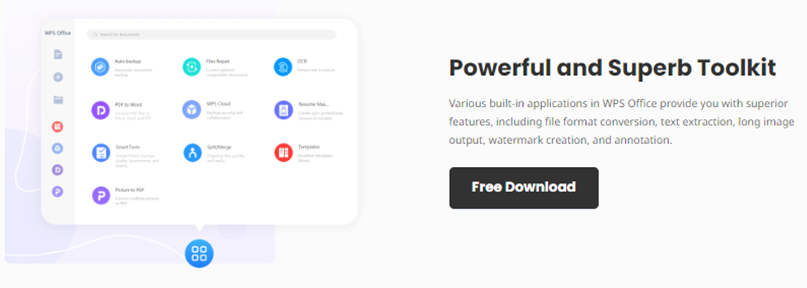
WPS Office offers a free version that includes the essential productivity applications most users need, including Writer, Spreadsheet, Presentation, basic PDF functionality, cloud storage, and support for dozens of file formats. Users who need advanced PDF editing, AI tools, OCR, additional cloud storage, or an ad-free experience can upgrade to a WPS Pro+ plan. For many students, freelancers, home users, and small businesses, the free version is capable enough for everyday document work, while the premium plan adds professional tools without requiring separate software for PDFs or AI-assisted productivity.
Microsoft 365
Microsoft 365 is built around a subscription model. Depending on the plan, users gain access to desktop Office applications, OneDrive storage, Outlook, Microsoft Teams (on many business plans), and Microsoft Copilot features on eligible subscriptions. The subscription also includes continuous updates and access to Microsoft's broader productivity ecosystem. For organizations already invested in Microsoft services, this integrated ecosystem can provide significant value. However, users who mainly create documents and presentations may not need every included service.
Pricing Comparison
| Category | WPS Office | Microsoft 365 |
|---|---|---|
| Free version | ✓ Yes | Web apps only |
| Premium upgrade | Optional | Subscription required for full desktop experience |
| Built-in PDF tools | Included in Pro+ | Basic support; advanced workflows may require additional Microsoft services or third-party software |
| AI productivity | Available in supported plans | Microsoft Copilot on eligible plans |
| Best value | Individuals, students, freelancers, SMBs | Businesses and enterprise organizations |
Editorial Insight
A common mistake is assuming that a higher subscription price automatically means better value. In reality, value depends on how many of the included features you actually use.
If your daily work consists of writing documents, updating spreadsheets, creating presentations, and managing PDFs, paying for enterprise collaboration tools may not provide a meaningful return. On the other hand, organizations that depend on Teams, SharePoint, and centralized administration are more likely to benefit from Microsoft's subscription model.
AI Productivity Features
Artificial intelligence has quickly become one of the most important factors when choosing productivity software. Rather than replacing traditional editing tools, AI now helps users draft content, improve writing, summarize information, generate presentations, and complete repetitive tasks more efficiently. Both WPS Office and Microsoft 365 have integrated AI into their productivity suites, but their focus is slightly different.
WPS AI
WPS AI is integrated across supported applications to assist with everyday productivity tasks such as:
Drafting and rewriting documents
Summarizing long content
Improving grammar and clarity
Generating presentation outlines
Assisting with spreadsheet formulas
Supporting selected PDF workflows
Because these capabilities are built into the WPS environment, users can perform many common tasks without switching between separate AI applications. Availability depends on the selected plan and region.
Microsoft Copilot
Microsoft Copilot is designed to work across the Microsoft 365 ecosystem, helping users create documents in Word, analyze data in Excel, generate presentations in PowerPoint, and automate tasks across supported Microsoft services. Its greatest advantage is deep integration with Microsoft's collaboration platform, making it particularly useful for organizations already using Microsoft 365 at scale. Availability varies by subscription and licensing.
AI Comparison
| AI Capability | WPS Office | Microsoft 365 |
|---|---|---|
| Writing assistance | ✓ | ✓ |
| Content summarization | ✓ | ✓ |
| Presentation support | ✓ | ✓ |
| Spreadsheet assistance | ✓ | ✓ |
| Integrated across office suite | ✓ | ✓ (eligible plans) |
My Recommendation
Both platforms now provide meaningful AI assistance. If your priority is everyday document productivity, either suite can improve efficiency. If your organization already relies on Microsoft's ecosystem, Copilot's integration may offer additional workflow advantages. If you want AI combined with document editing, PDF tools, and a lower-cost productivity suite, WPS Office presents a compelling alternative.
PDF Tools
PDFs have become a standard format for contracts, reports, invoices, resumes, and document sharing. Yet many office suites still treat PDF editing as a separate workflow. This is where WPS Office stands out.
Instead of requiring users to move between multiple applications, WPS Office integrates PDF capabilities into the same productivity suite used for documents, spreadsheets, and presentations. Depending on the plan, users can edit PDF text, convert PDFs to and from Office formats, merge or split files, compress documents, annotate content, and apply electronic signatures.
Microsoft 365 allows users to create PDFs and perform some editing through Microsoft applications, but advanced PDF workflows may require additional Microsoft services or dedicated PDF software depending on the task. For users who regularly work with contracts, forms, proposals, or business documents, having PDF tools built directly into the office suite can simplify everyday workflows and reduce the need for additional applications.
My Recommendation
Choose WPS Office if you want strong everyday productivity, integrated PDF tools, and AI capabilities at a lower overall cost. Choose Microsoft 365 if your organization gains value from Microsoft's broader cloud ecosystem, enterprise collaboration, and Copilot integration.
Collaboration and Team Productivity
Collaboration has become a core requirement for many workplaces. Whether you're reviewing documents with classmates, sharing proposals with clients, or coordinating projects across departments, the ability to work on files together can significantly improve productivity. Both WPS Office and Microsoft 365 support collaborative document workflows, but they're designed for different scales of teamwork.

WPS Office
WPS Office includes collaboration features through WPS Cloud and WPS Docs, allowing users to:
Share documents using links
Collaborate on supported documents in real time
Add comments
Track changes
Control view and edit permissions
Access files across desktop, web, and mobile devices
These capabilities are well suited to students, freelancers, educators, and small businesses that need straightforward document collaboration without deploying a larger enterprise collaboration platform.
Microsoft 365
Microsoft 365 is built around collaborative work. Its ecosystem combines:
OneDrive
Microsoft Teams
SharePoint
Outlook
Real-time co-authoring
Organization-wide permissions
Enterprise identity management
For businesses already operating within Microsoft's ecosystem, these services create a tightly integrated collaboration environment across communication, meetings, document storage, and editing.
My Recommendation
If your team mainly needs to edit and share documents together, both suites can support everyday collaboration.
However, if your organization depends on Microsoft Teams, SharePoint, centralized IT administration, or company-wide governance, Microsoft 365 remains the stronger choice. This isn't a weakness of WPS Office — it's simply a reflection that the two products are designed for different audiences.
Microsoft Office Compatibility
Compatibility is often the deciding factor when switching to a different office suite. The good news is that both WPS Office and Microsoft 365 support the file formats most professionals use every day.
Everyday File Compatibility
WPS Office supports Microsoft Office formats including:
DOC and DOCX
XLS and XLSX
PPT and PPTX
PDF
For everyday business documents, reports, presentations, and spreadsheets, users can generally open, edit, and save files while maintaining formatting compatibility. Microsoft 365 naturally provides native support for its own formats and remains the reference platform for organizations that rely on advanced Office-specific features.
When Compatibility Matters Most
Most users don't work with highly specialized Office documents every day. However, if your workflow depends on:
Complex VBA macros
Power Query
Power Pivot
Custom add-ins
Enterprise Excel models
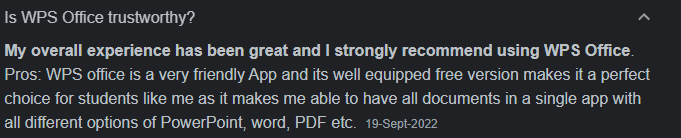
Microsoft 365 is generally the safer choice because those features are designed specifically for Microsoft's ecosystem. For typical office work — including reports, invoices, proposals, presentations, coursework, and standard spreadsheets — WPS Office supports Microsoft Office file formats that meet the needs of most users. Community feedback also consistently highlights smooth handling of standard Microsoft Office formats in everyday workflows.
| Workflow | Recommended Choice |
|---|---|
| Standard Office documents | Both |
| Reports and proposals | Both |
| Student assignments | WPS Office |
| Business presentations | Both |
| Advanced Excel automation | Microsoft 365 |
| Enterprise document workflows | Microsoft 365 |
Which Office Suite Should You Choose?
Rather than asking which office suite is universally "better," it's more useful to ask which one best supports the way you work.
Choose WPS Office if you:
Want an affordable alternative to Microsoft 365
Primarily create and edit documents, spreadsheets, and presentations
Frequently work with PDF files
Prefer a familiar Microsoft-style interface
Need cross-platform support, including Linux
Want AI-powered productivity features without committing to a large enterprise ecosystem
Are a student, freelancer, home user, or small business owner
Choose Microsoft 365 if you:
Work in a medium or large organization
Depend on Microsoft Teams and SharePoint
Require advanced Excel capabilities
Need enterprise security, compliance, and centralized administration
Already use Microsoft's cloud services across your organization
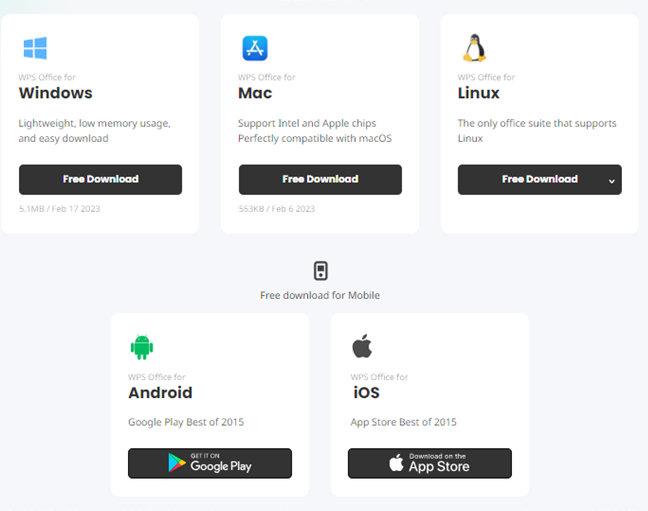
WPS Office multi platform downloads
Final Thoughts
Microsoft 365 continues to set the benchmark for enterprise collaboration and organizations deeply invested in Microsoft's ecosystem. Its strength lies in bringing communication, cloud services, administration, and productivity tools together into a unified platform.
WPS Office takes a different approach. Instead of trying to replicate every enterprise capability, it focuses on delivering the features most people use every day: document editing, spreadsheets, presentations, PDF tools, AI-assisted productivity, and strong Microsoft Office compatibility — all within a familiar, cross-platform experience.
For many students, freelancers, professionals, and small businesses, that combination represents a compelling balance of functionality, simplicity, and value. Ultimately, the right choice isn't about selecting the suite with the most features — it's about choosing the one that best matches your workflow, collaboration needs, and budget.
Ready to try WPS Office? If you're looking for an office suite that combines Microsoft Office compatibility, integrated PDF tools, AI-powered productivity, and support across Windows, macOS, Linux, Android, iOS, and the web, WPS Office offers a practical solution for both personal and professional work. Download WPS Office.

'%3e%3cpath%20d='M19.9911%204.11386V6.471H18.5894C18.0775%206.471%2017.7322%206.57814%2017.5536%206.79243C17.3751%207.00671%2017.2858%207.32814%2017.2858%207.75671V9.44421H19.9019L19.5536%2012.0871H17.2858V18.8639H14.5536V12.0871H12.2769V9.44421H14.5536V7.49779C14.5536%206.39064%2014.8632%205.53201%2015.4822%204.92189C16.1013%204.31177%2016.9257%204.00671%2017.9554%204.00671C18.8304%204.00671%2019.509%204.04243%2019.9911%204.11386Z'%20fill='%23333333'/%3e%3c/g%3e%3cdefs%3e%3cclipPath%20id='clip0_2938_8199'%3e%3crect%20width='16'%20height='16'%20fill='white'%20transform='translate(8%204.00671)'/%3e%3c/clipPath%3e%3c/defs%3e%3c/svg%3e)
'%3e%3cpath%20d='M17.5237%2010.7813L23.4811%204H22.0699L16.8949%209.88693L12.7648%204H8L14.2469%2012.9029L8%2020.0133H9.4112L14.8725%2013.7952L19.2352%2020.0133H24M9.92053%205.04213H12.0885L22.0688%2019.0224H19.9003'%20fill='%23333333'/%3e%3c/g%3e%3cdefs%3e%3cclipPath%20id='clip0_2938_8200'%3e%3crect%20width='16'%20height='16.0134'%20fill='white'%20transform='translate(8%204)'/%3e%3c/clipPath%3e%3c/defs%3e%3c/svg%3e)


