

Instructors and editors increasingly ask whether prose came from an AI model. Searches for ChatGPT Zero and tools like ZeroGPT refer to AI detection scores—not a OpenAI product name, but a shorthand students use when a draft “comes back hot” on a checker.
Detection is probabilistic. False positives hit careful human writers; false negatives miss lightly edited AI text. Your workflow should combine ethical drafting, disclosure rules, and human revision in WPS Writer—not chasing a perfect detector score.
Read your course or workplace AI policy first. Some ban pasted model output entirely; others require citation of AI-assisted brainstorming.
Editors care whether the ideas are yours and properly sourced. A detector score does not replace a conversation about process, but it may start that conversation—respond with revisions, not panic.
Workplace writers face similar questions when publishing thought-leadership posts. Disclosure norms differ from campus honor codes, but the revision habit in Writer is the same: cite sources, show edits, keep drafts local.
ChatGPT Zero and AI Detection: Review Drafts Before You Submit
What ChatGPT Zero and AI Detectors Claim
Services such as ZeroGPT, classroom LMS plugins, and standalone upload sites estimate the chance that text was model-generated. They look for patterns—low perplexity, uniform sentence length, certain phrase clusters—not a hidden watermark in your .docx.
Score: Percentage or label like “AI generated.”
Limits: Short passages, lists, and technical prose confuse models.
Privacy: Uploading a draft sends it to a third party.
Treat a flag as a prompt to review and cite, not automatic proof of misconduct.
Some LMS tools highlight sentences individually. Use those highlights as an outline for rewrite passes instead of regenerating the whole essay in a chat window.


Revise Drafts in WPS Writer After a Flag
Open the .docx in WPS Writer with Track Changes on.
Replace generic transitions with your own evidence, data, or course readings.
Add citations the model skipped; verify quotes against the PDF source.
Vary sentence length and insert discipline-specific terms your rubric expects.
Run Review → Word Count so section limits still match after rewrites.
Human revision improves learning outcomes; it also changes stylometric signals detectors use—without guaranteeing any target score.
Read the draft aloud in Writer. Monotone rhythm often flags detectors even when the prose is entirely human; varying openings fixes both style and credibility.
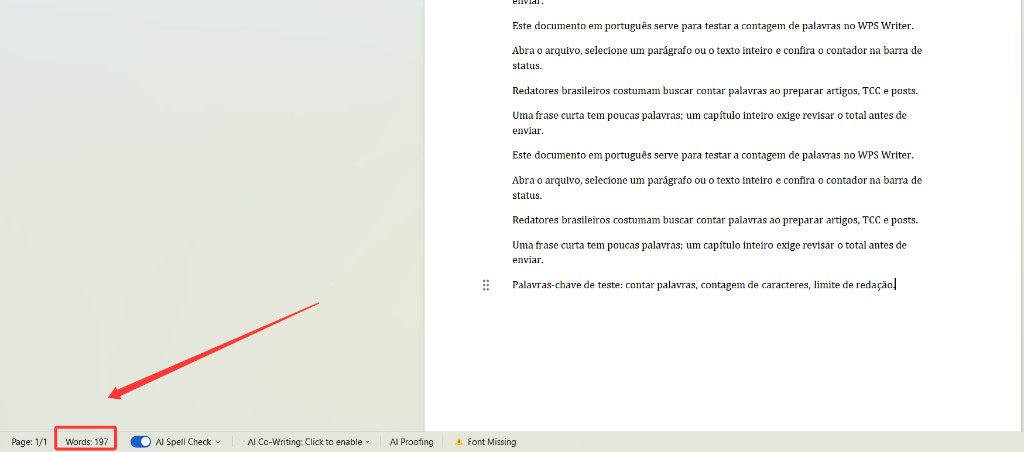
Revise draft with Track Changes in WPS Writer
Policies, Disclosure, and Original Work
Many syllabi now require an AI disclosure paragraph: which tools you used and for what (outline, grammar, translation). Put that statement in the introduction or footnote in the same Writer file you submit.
Do not upload classmates’ essays to public detectors. That shares their work with a vendor without consent.
When collaboration is allowed, name co-authors explicitly. AI is not a co-author on most academic policies today.
Keep version history: essay-human-rev2.docx documents your editing path if integrity office asks.
Translation assistance deserves its own disclosure line. Machine translation of your own notes is different from submitting model-generated English paragraphs; policies increasingly distinguish them.
When Not to Rely on AI Detection
English learners: Simple syntax can trigger false positives.
Technical specs: Boilerplate repeats across human authors.
Edited AI: Heavy human rewrite may still read oddly to instructors.
Legal risk: High-stakes accusations need more than a free web score.
Prefer process integrity: drafts, notes, and revision history in Writer over a single detector screenshot.
Link reading lists and lab notebooks in appendices when your program allows supplemental evidence of original work.
Group projects should document who drafted each section. Shared detector scores do not show individual contribution unless you attach revision history per author.
Faculty office hours are the right place to ask how your program interprets AI assistance. A detector screenshot is not a substitute for that conversation when the policy is ambiguous.
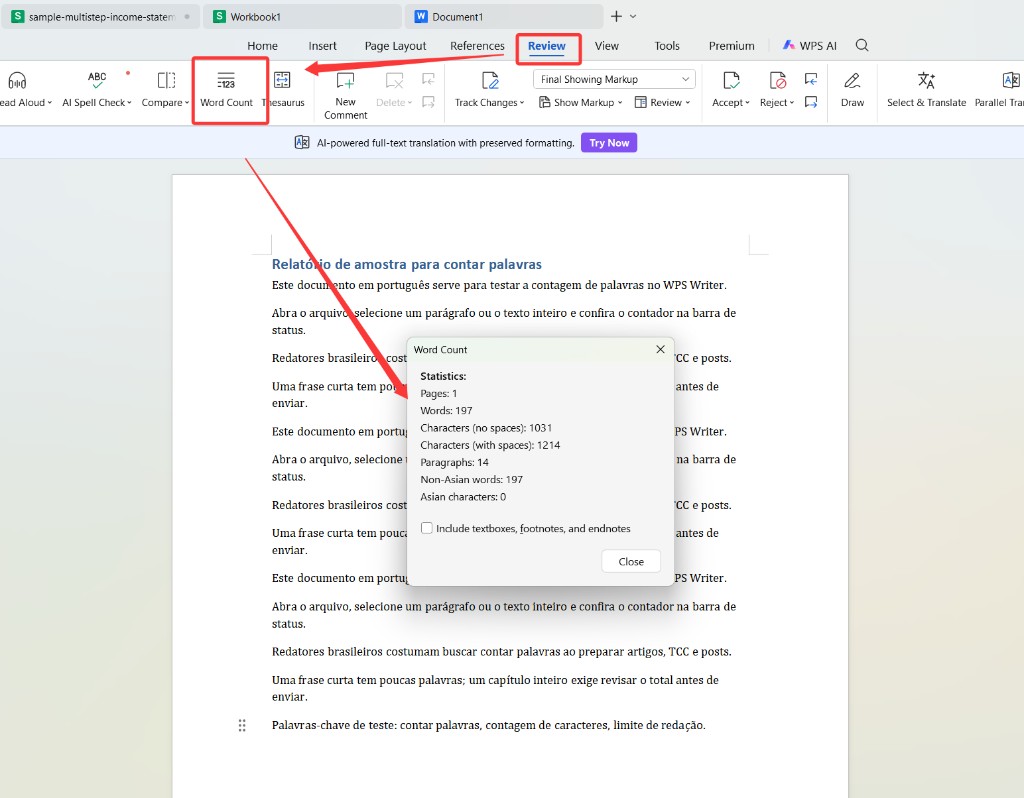
Word count while revising AI-flagged sections
Build an Ethical Writing Habit Beyond ChatGPT Zero
Start assignments from your notes, readings, and lab data in Writer before you open any generative tool. Outlines you type yourself anchor the final voice.
Use AI—if policy allows—for brainstorming questions, not for paste-ready paragraphs. Move any allowed suggestions into your own sentences with citations.
Schedule rewrite time the same day you draft. Fresh eyes catch generic phrasing that detectors and instructors both dislike, even when the text is entirely human.
Compare Detector Results with Your Own Notes
Save outlines, reading notes, and lab logs in separate Writer files. If integrity staff ask how you built the argument, those files support a human workflow better than a low detector score alone.
Highlight quoted material with consistent styles so reviewers see where your voice ends and source text begins. Mis-cited quotes trigger academic concerns regardless of AI detectors.
When permitted, ask whether your program uses LMS-native detection or external tools. Policies differ on whether you may run your own ChatGPT Zero-style check before submit.
Peer review workshops in Writer—comments and suggested edits—create a paper trail of human collaboration that complements your own revision notes.
Export a PDF with comments visible only when your instructor allows; some submission portals want a clean file without markup.
Bookmark your institution’s academic integrity page in the browser, but draft and revise the submission itself in Writer so file history stays on your computer.
Save incremental versions daily during crunch week so a corrupted file does not erase a week of careful, cited human rewrites and research notes.
The Best Free Office Alternative: WPS Office
ChatGPT Zero-style tools are a signal; WPS Writer is where you prove the final words are yours.
| WPS Writer revision workflow | Paste into ChatGPT Zero-style site | |
|---|---|---|
| Privacy | Draft stays local while you edit. | Full text leaves your machine. |
| Evidence | Track Changes shows human edits. | One opaque percentage. |
| Word limits | Status bar counts after rewrite. | Detector ignores syllabus caps. |
| Submission | Export the same .docx LMS expects. | Separate file for checker and LMS. |
| Learning | You practice argument and citation. | Chasing score without depth. |
Track Changes and comments for advisor review.
Word Count and spelling in one desktop app.
PDF export when the policy asks for a frozen submission copy.
Use WPS Writer for disclosure, revision, and export— and follow your institution’s AI rules before you submit.
FAQs
Is ChatGPT Zero an official OpenAI tool?
No. It is a common search phrase tied to third-party AI detectors such as ZeroGPT, not a product from OpenAI.
Can WPS Writer detect AI text?
Writer does not replace dedicated detectors; it helps you edit, cite, and format the final draft.
Will human editing always clear a detector?
No guarantee. Focus on policy compliance and quality evidence, not only lowering a score.
Should I run every paragraph through ZeroGPT?
Uploading shares content with a vendor; check privacy and academic honesty rules first.
How do I disclose AI help in my paper?
Add a short statement naming tools and tasks; place it where your syllabus requires—often the introduction or acknowledgments. Keep the disclosure in the same Writer file you submit so reviewers see it beside the final text.

Summary
AI detectors estimate probability; they are not courtroom proof. Revise flagged drafts in WPS Writer with citations, disclosure, and Track Changes.
Keep work local when possible, follow course AI policy, and submit the .docx that shows your revision path.