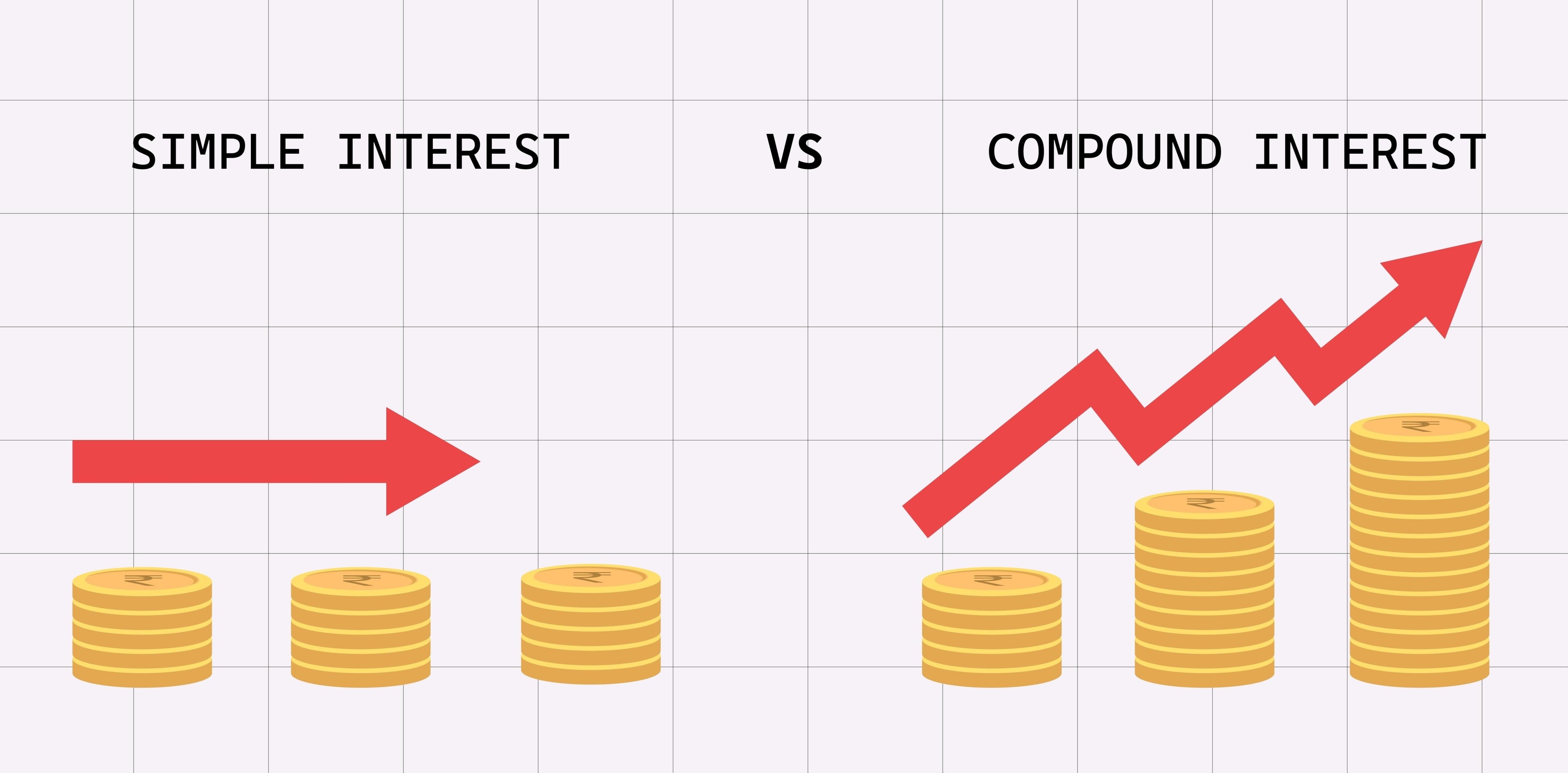
Understanding the difference between simple and compound interest is the key to smarter financial planning.
Compound interest is interest calculated on both the initial principal and all previously accumulated interest. Unlike simple interest, which only earns returns on your original deposit, compound interest allows your money to grow exponentially over time.
This is why Albert Einstein reportedly called it the "eighth wonder of the world." The longer your money compounds, the faster it grows — making early and consistent investing incredibly powerful.
Simple interest is calculated only on the original principal. The interest earned each period remains constant regardless of how long you invest.
Compound interest is calculated on both principal and accumulated interest. Your earnings accelerate over time as interest earns its own interest.