

Admissions readers skim hundreds of essays in a sitting. If your draft reads like a resume list or sounds like everyone else, the personal statement will not show who you are or what you will contribute on campus.
You will map the prompt, choose one focused story, draft in a clear arc, and polish without losing your voice. The workflow below works for college, graduate, and scholarship applications when word limits differ.
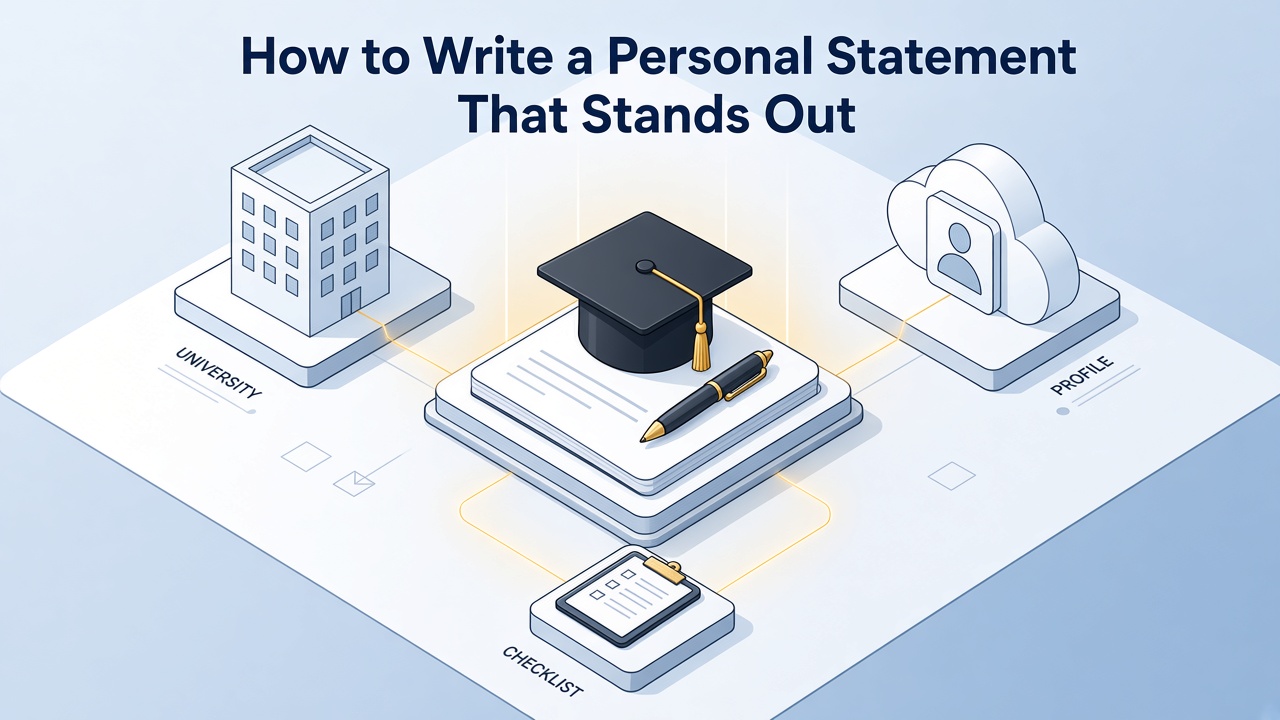
How to Write a Personal Statement That Stands Out
How to write a personal statement from the prompt
Start with the exact question and character or word limit. Highlight action verbs—describe, reflect, explain—because they tell you whether the reader wants a story, an obstacle, or a goal statement.
Copy the prompt into a blank document so you can draft against it. Note forbidden topics (some programs discourage trauma dumping or unrelated celebrity heroes) and whether multiple short answers share one theme you should not repeat.
Before you write a sentence, mark three constraints in the margin: the word or character cap, who reads it (admissions, scholarship committee, or employer), and the one thing the prompt requires you to prove. If a sentence does not serve that proof, it does not belong, even if it is well written.
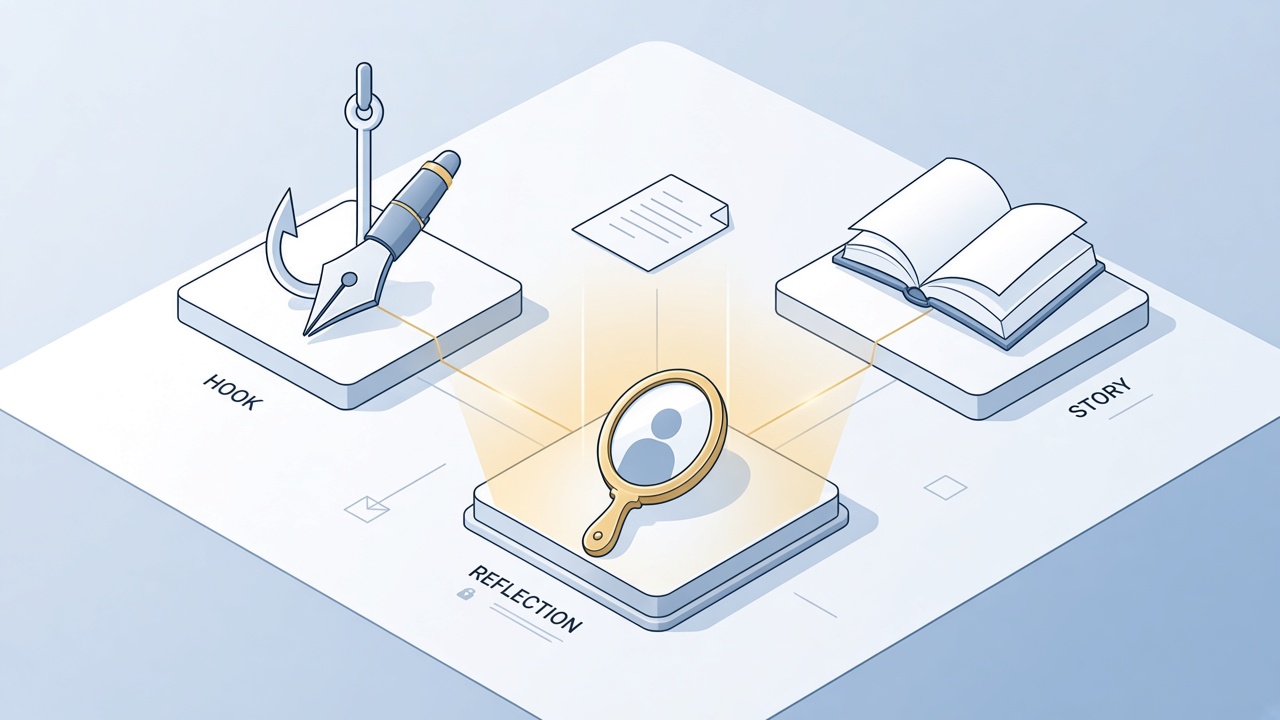
Prompt limit and one proof for the essay


Brainstorm angles for your personal statement
List five moments that changed how you think, not five awards. For each, write one sentence on what you did and one on what you learned. Pick the moment that is specific enough to picture and honest enough to defend in an interview.
Show, do not inventory. One vivid scene beats ten club names.
Match the field. STEM prompts can still be personal; focus on curiosity or a problem you chased.
Stay in your lane. Write about your role, not your friend’s drama.
Test the finalist with three questions. Can you name a place, object, or line of dialogue from that day? Can you say what you did, not what the group did? Can you connect the lesson to this application without a new topic in the last paragraph? If any answer is no, pick another moment.
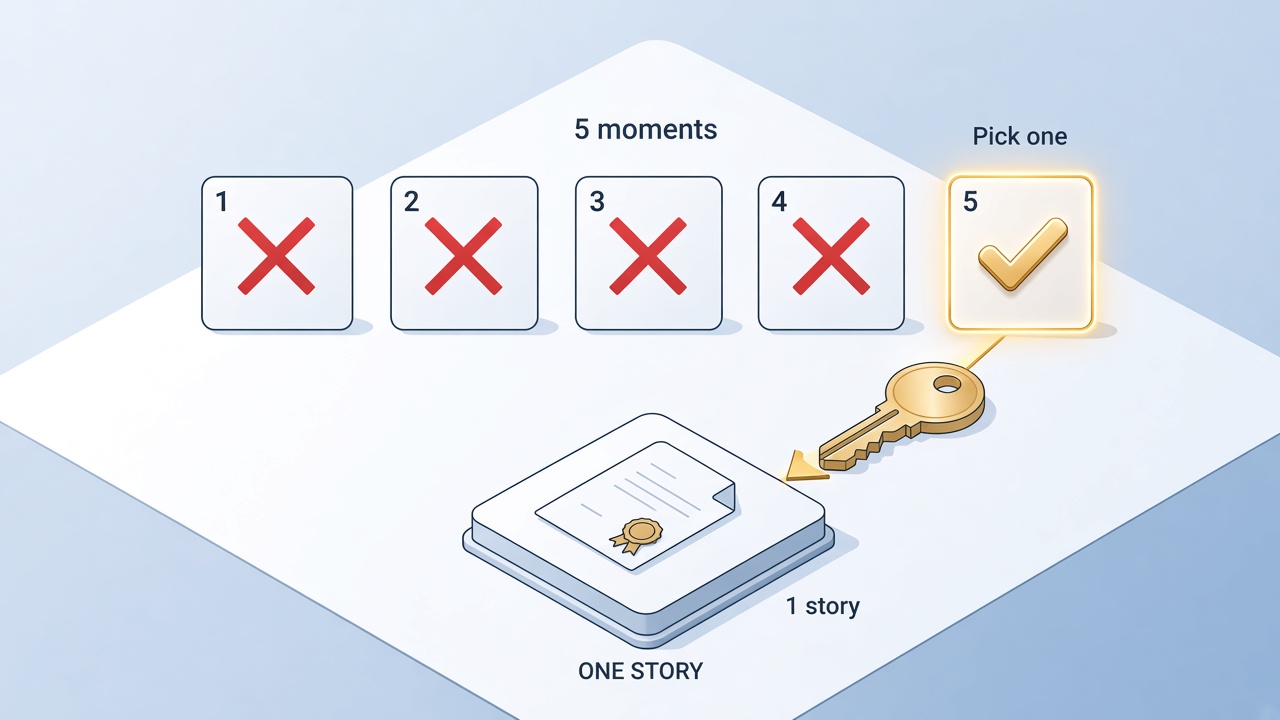
Pick one of five moments for your essay
Draft your personal statement with clear structure
Use a simple arc: opening scene, challenge or question, what you did, and where it leaves you now. Keep paragraphs short and vary sentence length so the essay sounds like you, not a thesaurus.
Open with a concrete image in under 120 words. Skip dictionary definitions, birth stories, and “ever since I was a child.”
Explain the stakes—why this moment mattered to your growth or goals. One obstacle is enough; a second story usually steals the ending.
Close forward: what you will explore next in this program, without flattery clichés or a restatement of the school’s slogan.
Keep body paragraphs to about 4–7 sentences. If a paragraph only lists activities, fold one detail into the story and move the rest to a resume or activities list the portal already asks for.
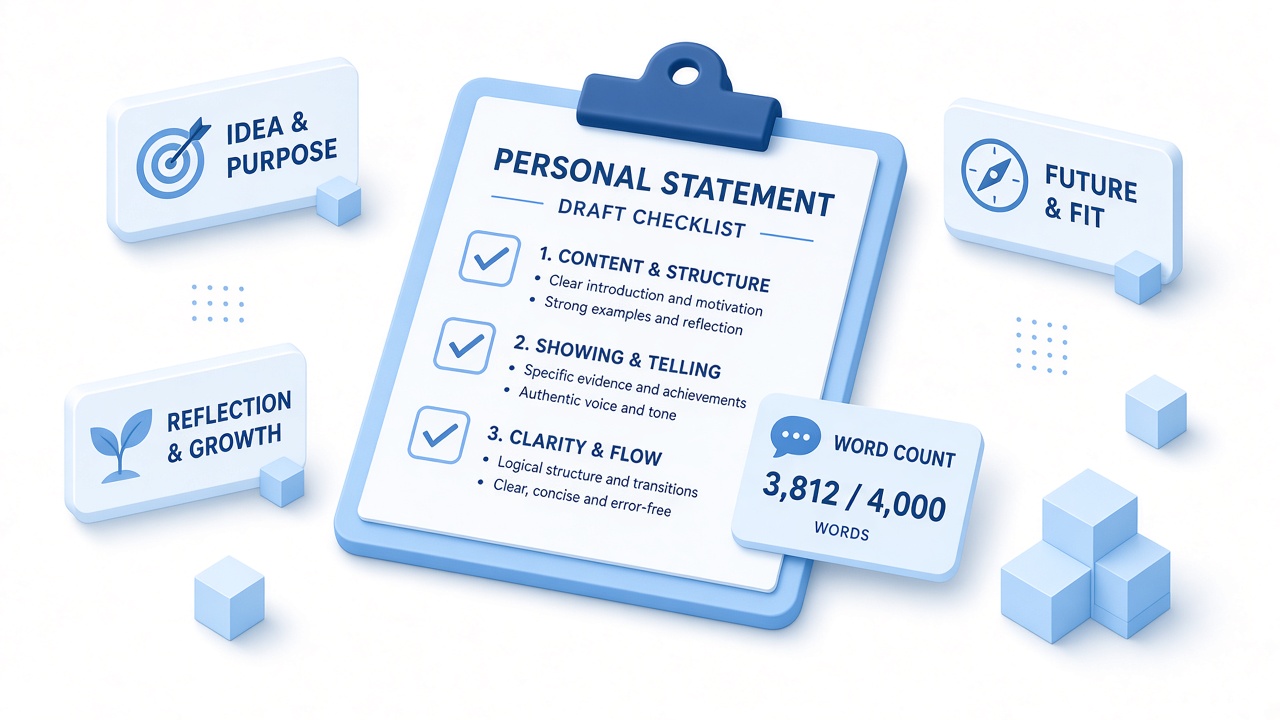
Open stakes action and close arc
Revise and proofread your personal statement
Read aloud once for rhythm, once backward sentence-by-sentence for typos. Cut every line that could belong in another applicant’s file. Ask one reader who knows you well whether the voice still sounds like you.
Cut stock lines on a second pass: “passion for learning,” “diverse community,” “make a difference,” and any sentence that names a ranking. In WPS Writer, run the spelling and grammar check, then Menu → Save As with a version name so you can compare drafts. Export PDF only when the portal requires it; otherwise submit DOCX.
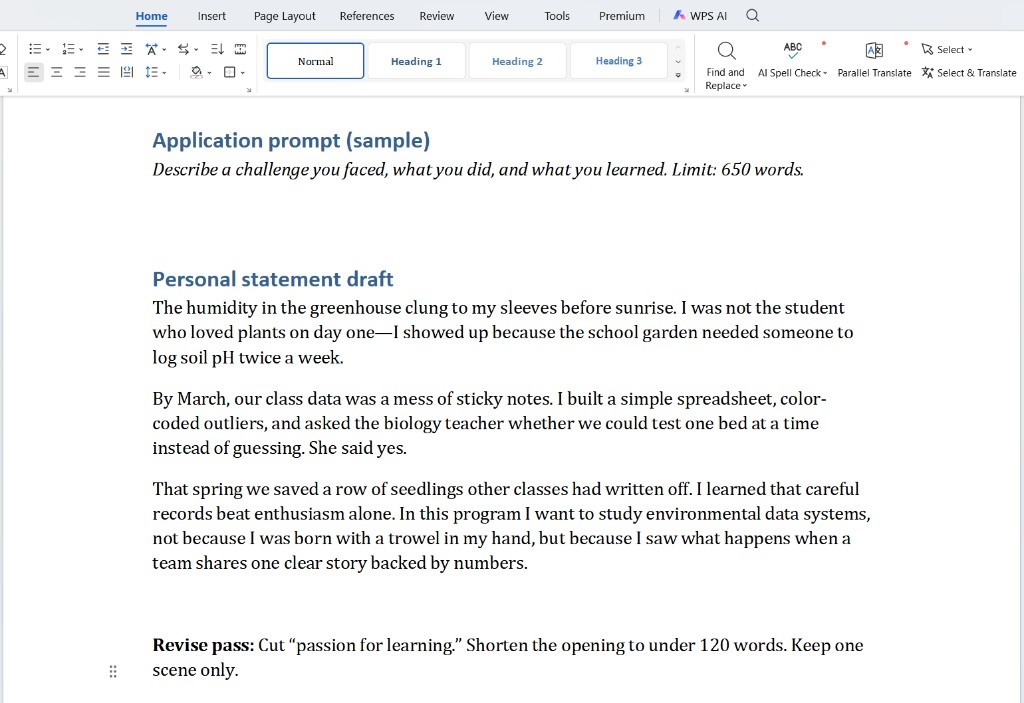
WPS Writer prompt draft and revise pass
The Best Free Office Alternative: WPS Office
Most personal statements start in a word processor, move through peer review, and end as a PDF upload. WPS Office keeps drafting, commenting, and export in one install with a familiar ribbon and free templates for cover pages and scholarship forms.
Use Writer for drafting, Spreadsheet for scholarship trackers, and PDF tools when a portal demands a locked layout. AI writing aids can suggest tighter phrasing, but keep final wording yours so the essay stays authentic.
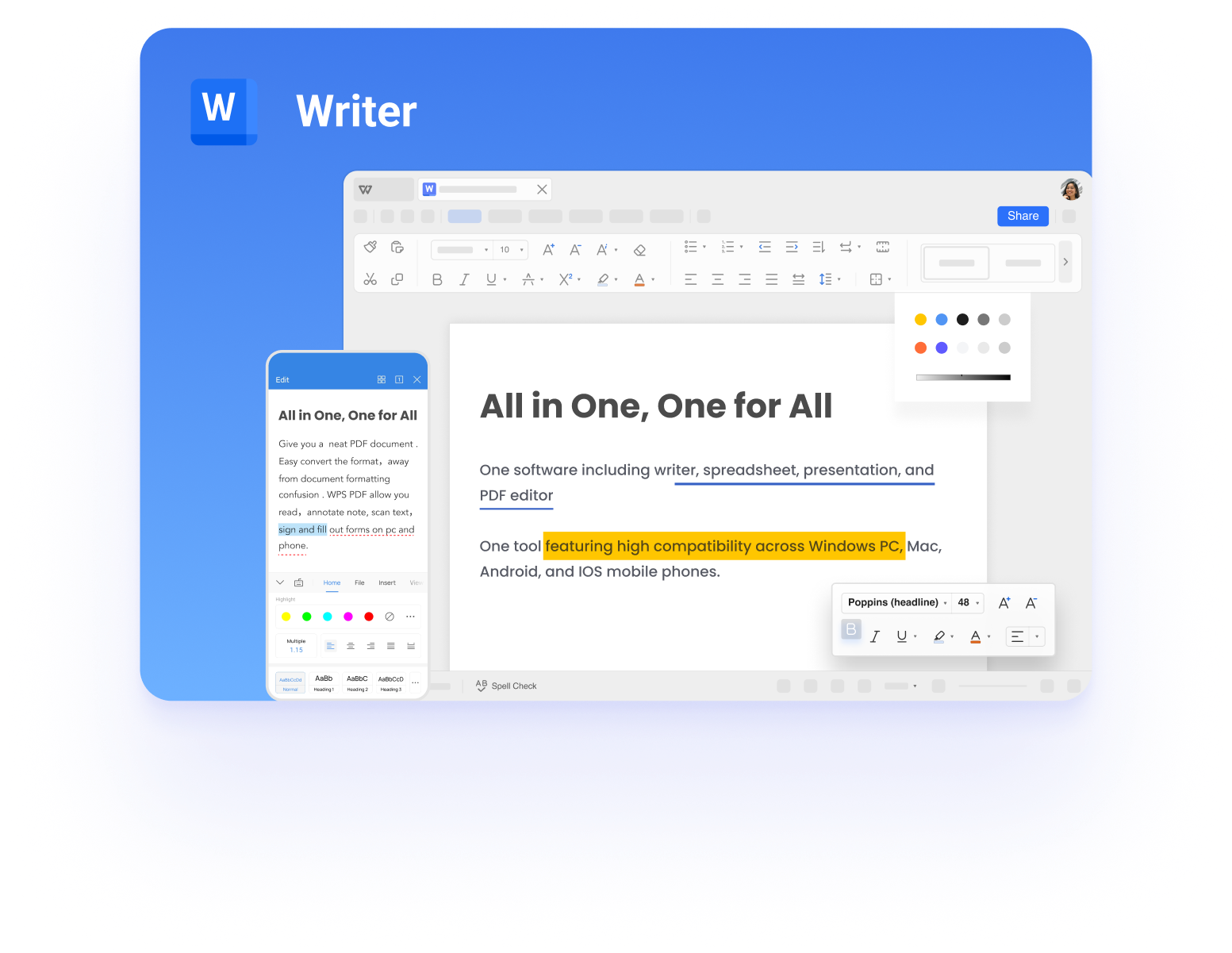
WPS Writer for application drafts
FAQs
How long should a personal statement be?
Follow each program’s limit exactly—common ranges are 500–650 words for undergraduate prompts and 1–2 pages for graduate statements. Going over often truncates in online forms.
Can I reuse the same personal statement?
Reuse themes, not entire essays. Tailor the opening and program-specific lines so each reader sees fit, not copy-paste.
Should I mention hardship in a personal statement?
Only if you are ready to connect it to growth and future goals. Focus on agency and reflection, not graphic detail for shock value.
Is it okay to use humor?
Light, specific humor can work when it reveals character. Avoid sarcasm that could read as disrespect in a formal application.
Does WPS help with personal statement formatting?
Writer handles fonts, spacing, word count, and PDF export. Use styles instead of manual spacing so pasted text does not break when you upload.