

'%3e%3cpath%20d='M8%200C12.4183%200%2016%203.58172%2016%208C16%2012.4183%2012.4183%2016%208%2016C3.58172%2016%200%2012.4183%200%208C0%203.58172%203.58172%200%208%200ZM11.6162%204.38379C11.2257%203.99337%2010.5927%203.99338%2010.2021%204.38379L8%206.58594L5.79785%204.38379C5.40732%203.99334%204.77429%203.99329%204.38379%204.38379C3.99331%204.77429%203.99335%205.40733%204.38379%205.79785L6.58594%208L4.38379%2010.2021C3.99348%2010.5927%203.99341%2011.2257%204.38379%2011.6162C4.77426%2012.0066%205.40734%2012.0065%205.79785%2011.6162L8%209.41406L10.2021%2011.6162C10.5927%2012.0066%2011.2257%2012.0067%2011.6162%2011.6162C12.0067%2011.2257%2012.0066%2010.5927%2011.6162%2010.2021L9.41406%208L11.6162%205.79785C12.0066%205.40735%2012.0066%204.77429%2011.6162%204.38379Z'%20fill='%23080E17'%20fill-opacity='0.46'/%3e%3c/g%3e%3cdefs%3e%3cclipPath%20id='clip0_3761_713'%3e%3crect%20width='16'%20height='16'%20fill='white'/%3e%3c/clipPath%3e%3c/defs%3e%3c/svg%3e)



'%3e%3cpath%20fill-rule='evenodd'%20clip-rule='evenodd'%20d='M21.4999%2010.9993C21.4999%205.20009%2016.7986%200.498901%2010.9993%200.498901C5.19994%200.498901%200.498657%205.20009%200.498657%2010.9993C0.498657%2016.2404%204.33858%2020.5844%209.35855%2021.3722V14.0346H6.69238V10.9993H9.35855V8.68594C9.35855%206.05427%2010.9262%204.60062%2013.3248%204.60062C14.4736%204.60062%2015.6753%204.80571%2015.6753%204.80571V7.38979H14.3512C13.0468%207.38979%2012.64%208.19921%2012.64%209.0296V10.9993H15.5523L15.0867%2014.0346H12.64V21.3722C17.66%2020.5844%2021.4999%2016.2404%2021.4999%2010.9993Z'%20fill='%231568EA'/%3e%3c/g%3e%3c/svg%3e)


'%3e%3cpath%20d='M2.42045%2022.1876H6.31818V12.7217L0.75%208.54553V20.5171C0.75%2021.4414%201.49892%2022.1876%202.42045%2022.1876Z'%20fill='%234285F4'/%3e%3cpath%20d='M19.682%2022.1876H23.5797C24.5041%2022.1876%2025.2502%2021.4387%2025.2502%2020.5171V8.54553L19.682%2012.7217'%20fill='%2334A853'/%3e%3cpath%20d='M19.682%205.48293V12.7216L25.2502%208.54543V6.31816C25.2502%204.25236%2022.8921%203.07469%2021.2411%204.31361'%20fill='%23FBBC04'/%3e%3cpath%20d='M6.31824%2012.7217V5.48303L13.0001%2010.4944L19.6819%205.48303V12.7217L13.0001%2017.733'%20fill='%23EA4335'/%3e%3cpath%20d='M0.75%206.31816V8.54543L6.31818%2012.7216V5.48293L4.75909%204.31361C3.10534%203.07469%200.75%204.25236%200.75%206.31816Z'%20fill='%23C5221F'/%3e%3c/g%3e%3cdefs%3e%3cclipPath%20id='clip0_2954_7305'%3e%3crect%20width='24.5'%20height='18.375'%20fill='white'%20transform='translate(0.75%203.8125)'/%3e%3c/clipPath%3e%3c/defs%3e%3c/svg%3e)


Sharing contracts, tax returns, or medical records as PDFs is common practice, but an unprotected file can be opened by anyone who gets hold of it. Learning how to password protect a PDF takes only a few minutes, and you can do it for free with tools that are already on your computer. This guide covers built-in methods for Mac and Windows, free online tools (and their privacy trade-offs), Adobe Acrobat, and a smarter offline alternative: WPS Office.
Part 1: How to Password Protect a PDF Using Built-In OS Features & Everyday Apps
You do not always need to install new software. Both macOS and Windows offer practical ways to encrypt a PDF without spending a cent, and because everything happens locally, your file never leaves your hard drive.
On Mac: use the Preview app.
- Open your PDF in Preview (the default macOS viewer).
- Go to File > Export as PDF (or File > Export).
- In the export dialog, click Show Details if the options are hidden.
- Check Encrypt, then enter and verify your password.
- Click Save. The exported copy now requires a password to open.
On Windows: the Microsoft Word workaround.
- Open the PDF in Microsoft Word (Word will convert it into an editable document).
- Go to File > Save As and choose PDF as the format.
- Click Options in the save dialog.
- Tick Encrypt the document with a password, set your password, and confirm.
- Save the file. Anyone without the password will be locked out.
Both methods are free and completely offline, which makes them ideal for highly sensitive documents such as SSN forms or bank statements.
Part 2: How to Password Protect a PDF Online (And the Privacy Risks)
Browser-based tools like Smallpdf and iLovePDF are the fastest option when you are on a borrowed computer or just need a one-off fix:
- Open the tool's "Protect PDF" page in your browser.
- Upload your file and type your desired password.
- Download the encrypted PDF.
Convenient as they are, think twice before uploading anything confidential. Even when a site promises to delete your file after an hour, your document still passes through a third-party server. Tax returns, ID scans, and business contracts are better handled with an offline desktop tool.
Part 3: How to Password Protect a PDF Using Adobe Acrobat
If your workplace already pays for Adobe Acrobat Pro, here is the standard route:
- Open the PDF in Adobe Acrobat Pro.
- Go to Tools > Protect.
- Choose Encrypt > Encrypt with Password.
- Select whether to require a password to open the document or only to restrict editing/printing, then set your password and compatibility level.
- Save the file to apply the protection.
The catch is the price: Acrobat Pro is a recurring subscription that costs more than most individuals or small businesses want to pay for occasionally locking a file.
Part 4: How to Password Protect a PDF Securely and Affordably with WPS Office
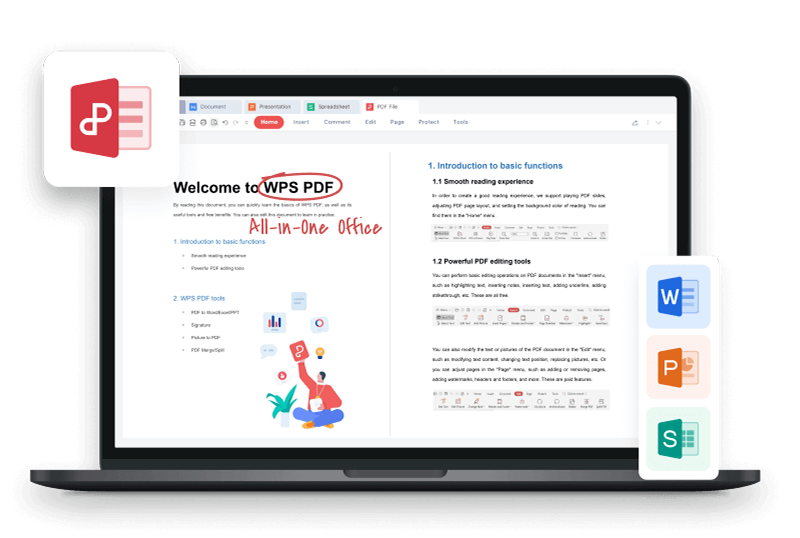
WPS Office hits the sweet spot: Acrobat-grade PDF features, fully offline processing, and a free tier that covers everyday encryption tasks. Here is how to do it:
- Download and open WPS Office, then load your PDF in WPS PDF.
- Switch to the Protect tab and click Encrypt.
- Set a Document Open password so the file cannot be viewed without it.
- Optionally set a Permissions password to block printing, copying, or editing while still allowing people to read the file.
- Click Confirm and save the protected PDF.
Because WPS Office encrypts the file locally on your device, nothing is uploaded to the cloud—it is safe for financial and medical documents. And since WPS Office also includes full Word, Excel, and PowerPoint alternatives, you get an entire office suite plus a PDF editor in one lightweight, budget-friendly package.
FAQs
1. Can a password-protected PDF be cracked?
Permission passwords that merely block printing or copying can sometimes be bypassed with specialized tools, but a strong "Document Open" password using modern 128-bit or 256-bit AES encryption is extremely difficult to break. Always use a long password mixing letters, numbers, and symbols.
2. How can I password protect a PDF for free without downloading software?
Use Mac Preview or the "Save as PDF" encryption option in Microsoft Word. Both are built in and free. Online tools work too, but avoid uploading sensitive documents to web services.
3. What is the difference between a Document Open password and a Permissions password?
A Document Open password stops anyone without the code from viewing the file at all. A Permissions password lets anyone open and read the PDF, but restricts copying, editing, or printing.
4. Why use WPS Office to protect my PDFs?
WPS Office processes encryption locally for maximum privacy, supports both Open and Permissions passwords, and bundles a full office suite at a fraction of the cost of premium competitors.
Summary
To recap: Mac users can rely on Preview, Windows users can use the Word "Save as PDF" trick, online tools are fine for non-sensitive files, and Adobe Acrobat suits enterprises that already pay for it. For everyone else, WPS Office offers professional-grade offline encryption without the subscription sticker shock.
Special recommendation: If PDFs are part of your daily workflow, download WPS Office today and get powerful PDF encryption, seamless format conversion, and AI-powered document tools in one affordable suite—keeping your private data exactly that: private.

'%3e%3cpath%20d='M19.9911%204.11386V6.471H18.5894C18.0775%206.471%2017.7322%206.57814%2017.5536%206.79243C17.3751%207.00671%2017.2858%207.32814%2017.2858%207.75671V9.44421H19.9019L19.5536%2012.0871H17.2858V18.8639H14.5536V12.0871H12.2769V9.44421H14.5536V7.49779C14.5536%206.39064%2014.8632%205.53201%2015.4822%204.92189C16.1013%204.31177%2016.9257%204.00671%2017.9554%204.00671C18.8304%204.00671%2019.509%204.04243%2019.9911%204.11386Z'%20fill='%23333333'/%3e%3c/g%3e%3cdefs%3e%3cclipPath%20id='clip0_2938_8199'%3e%3crect%20width='16'%20height='16'%20fill='white'%20transform='translate(8%204.00671)'/%3e%3c/clipPath%3e%3c/defs%3e%3c/svg%3e)
'%3e%3cpath%20d='M17.5237%2010.7813L23.4811%204H22.0699L16.8949%209.88693L12.7648%204H8L14.2469%2012.9029L8%2020.0133H9.4112L14.8725%2013.7952L19.2352%2020.0133H24M9.92053%205.04213H12.0885L22.0688%2019.0224H19.9003'%20fill='%23333333'/%3e%3c/g%3e%3cdefs%3e%3cclipPath%20id='clip0_2938_8200'%3e%3crect%20width='16'%20height='16.0134'%20fill='white'%20transform='translate(8%204)'/%3e%3c/clipPath%3e%3c/defs%3e%3c/svg%3e)


