

'%3e%3cpath%20d='M8%200C12.4183%200%2016%203.58172%2016%208C16%2012.4183%2012.4183%2016%208%2016C3.58172%2016%200%2012.4183%200%208C0%203.58172%203.58172%200%208%200ZM11.6162%204.38379C11.2257%203.99337%2010.5927%203.99338%2010.2021%204.38379L8%206.58594L5.79785%204.38379C5.40732%203.99334%204.77429%203.99329%204.38379%204.38379C3.99331%204.77429%203.99335%205.40733%204.38379%205.79785L6.58594%208L4.38379%2010.2021C3.99348%2010.5927%203.99341%2011.2257%204.38379%2011.6162C4.77426%2012.0066%205.40734%2012.0065%205.79785%2011.6162L8%209.41406L10.2021%2011.6162C10.5927%2012.0066%2011.2257%2012.0067%2011.6162%2011.6162C12.0067%2011.2257%2012.0066%2010.5927%2011.6162%2010.2021L9.41406%208L11.6162%205.79785C12.0066%205.40735%2012.0066%204.77429%2011.6162%204.38379Z'%20fill='%23080E17'%20fill-opacity='0.46'/%3e%3c/g%3e%3cdefs%3e%3cclipPath%20id='clip0_3761_713'%3e%3crect%20width='16'%20height='16'%20fill='white'/%3e%3c/clipPath%3e%3c/defs%3e%3c/svg%3e)



'%3e%3cpath%20fill-rule='evenodd'%20clip-rule='evenodd'%20d='M21.4999%2010.9993C21.4999%205.20009%2016.7986%200.498901%2010.9993%200.498901C5.19994%200.498901%200.498657%205.20009%200.498657%2010.9993C0.498657%2016.2404%204.33858%2020.5844%209.35855%2021.3722V14.0346H6.69238V10.9993H9.35855V8.68594C9.35855%206.05427%2010.9262%204.60062%2013.3248%204.60062C14.4736%204.60062%2015.6753%204.80571%2015.6753%204.80571V7.38979H14.3512C13.0468%207.38979%2012.64%208.19921%2012.64%209.0296V10.9993H15.5523L15.0867%2014.0346H12.64V21.3722C17.66%2020.5844%2021.4999%2016.2404%2021.4999%2010.9993Z'%20fill='%231568EA'/%3e%3c/g%3e%3c/svg%3e)


'%3e%3cpath%20d='M2.42045%2022.1876H6.31818V12.7217L0.75%208.54553V20.5171C0.75%2021.4414%201.49892%2022.1876%202.42045%2022.1876Z'%20fill='%234285F4'/%3e%3cpath%20d='M19.682%2022.1876H23.5797C24.5041%2022.1876%2025.2502%2021.4387%2025.2502%2020.5171V8.54553L19.682%2012.7217'%20fill='%2334A853'/%3e%3cpath%20d='M19.682%205.48293V12.7216L25.2502%208.54543V6.31816C25.2502%204.25236%2022.8921%203.07469%2021.2411%204.31361'%20fill='%23FBBC04'/%3e%3cpath%20d='M6.31824%2012.7217V5.48303L13.0001%2010.4944L19.6819%205.48303V12.7217L13.0001%2017.733'%20fill='%23EA4335'/%3e%3cpath%20d='M0.75%206.31816V8.54543L6.31818%2012.7216V5.48293L4.75909%204.31361C3.10534%203.07469%200.75%204.25236%200.75%206.31816Z'%20fill='%23C5221F'/%3e%3c/g%3e%3cdefs%3e%3cclipPath%20id='clip0_2954_7305'%3e%3crect%20width='24.5'%20height='18.375'%20fill='white'%20transform='translate(0.75%203.8125)'/%3e%3c/clipPath%3e%3c/defs%3e%3c/svg%3e)


A contract may look straightforward until one paragraph changes when you get paid, what you must deliver, or how you can leave the agreement. A clause is an individual provision within the contract that addresses a particular subject, such as payment, confidentiality, or termination. Understanding that provision in context helps you see what you are actually agreeing to.
This guide focuses on contract clauses rather than grammar. You will learn to recognize common types, break down a short example, and prepare a clear review copy using WPS Office. The examples are for learning, not ready-to-sign legal wording; the effect of a clause depends on the agreement and applicable law.
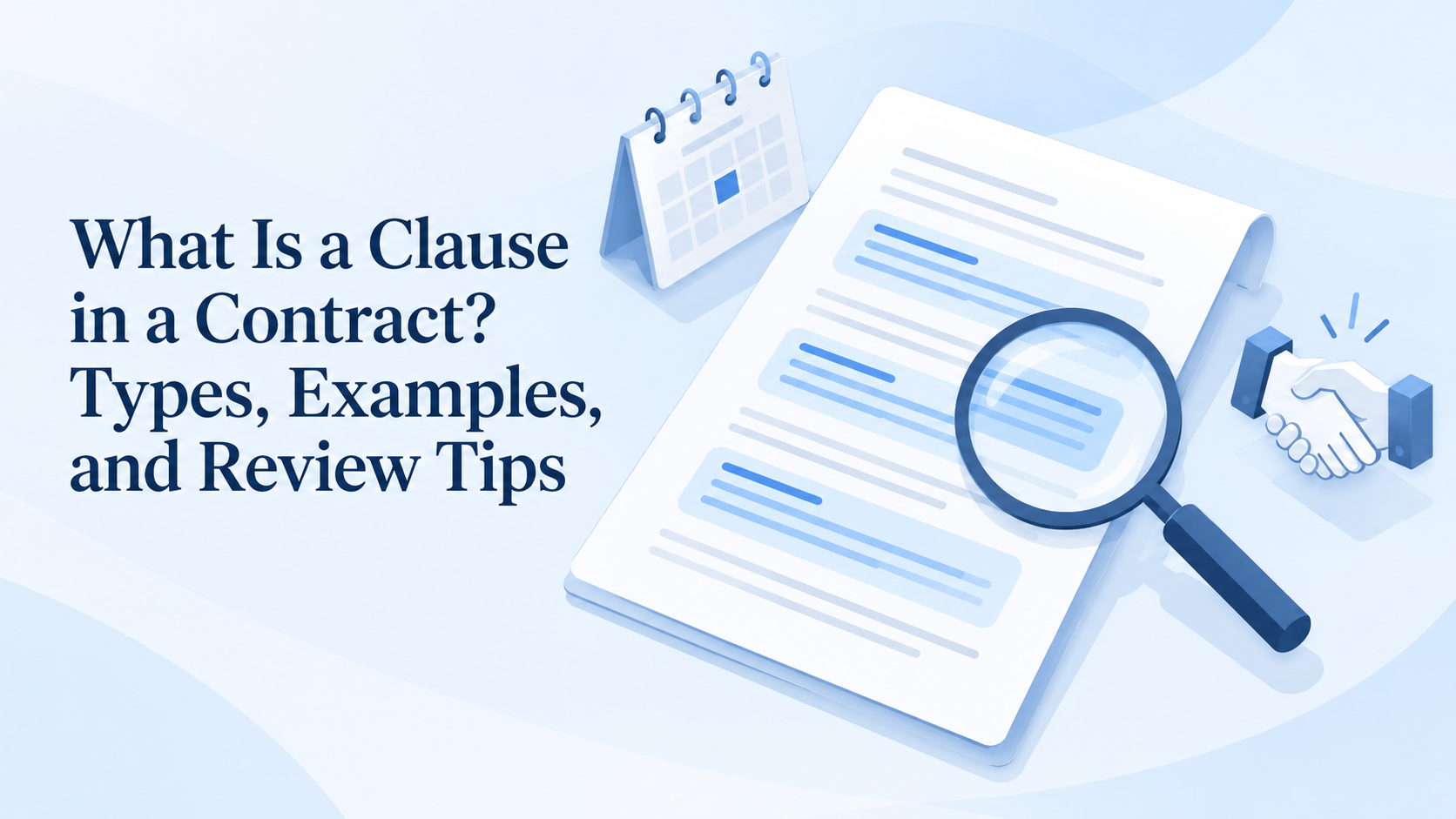
What Is a Clause in a Contract? Types, Examples, and Review Tips
Common contract clauses and what to check
Start with the clauses that affect your immediate decisions: the work, the payment, and the exit arrangements. Then examine how the remaining provisions change those obligations. A heading helps you navigate, but the wording underneath it matters more than the label.
| Clause type | What it addresses | Questions to ask while reading |
|---|---|---|
| Scope and delivery | The goods, services, or results to be provided | Are deliverables, exclusions, deadlines, and acceptance criteria clear? |
| Payment | Amounts, invoicing, and payment timing | What triggers payment? Are currency, taxes, expenses, and disputed invoices addressed? |
| Confidentiality | Use and disclosure of specified information | What information is covered, what exceptions apply, and how long do obligations last? |
| Termination | How the agreement may end | Who can terminate, for what reasons, with what notice, and with what remaining obligations? |
| Liability and indemnity | Allocation of specified losses or claims | Are there caps, exclusions, exceptions, or duties to handle another party's claim? |
| Governing law and disputes | The legal framework and dispute process | Which law applies, and where and how would a dispute be handled? |
| Entire agreement | The relationship between the signed agreement and earlier discussions | Are important promises included in the written agreement or its identified attachments? |
Read connected clauses together
A delivery date may appear in a schedule, while the main agreement explains what counts as acceptance. A payment provision may depend on both. Read definitions, cross-references, and attachments before deciding that one sentence gives the complete answer.
For example, a confidentiality clause might cover customer records but exclude information already public. The exception changes the scope of the obligation. Similarly, a termination clause may end future work while leaving confidentiality or payment duties in place.
A clause does not guarantee an outcome
A clause can record the parties' intended arrangement, but its presence alone does not establish that every part is enforceable. Avoid assuming that a familiar heading, a template, or a signature settles every legal question. Restrictions on certain terms vary by jurisdiction and contract type.
Entire-agreement clauses commonly address whether the written document represents the parties' final agreement. Cornell's explanation of integration clauses provides background on that concept. If a promise matters to your decision, flag it for inclusion or clarification rather than relying on a remembered conversation.
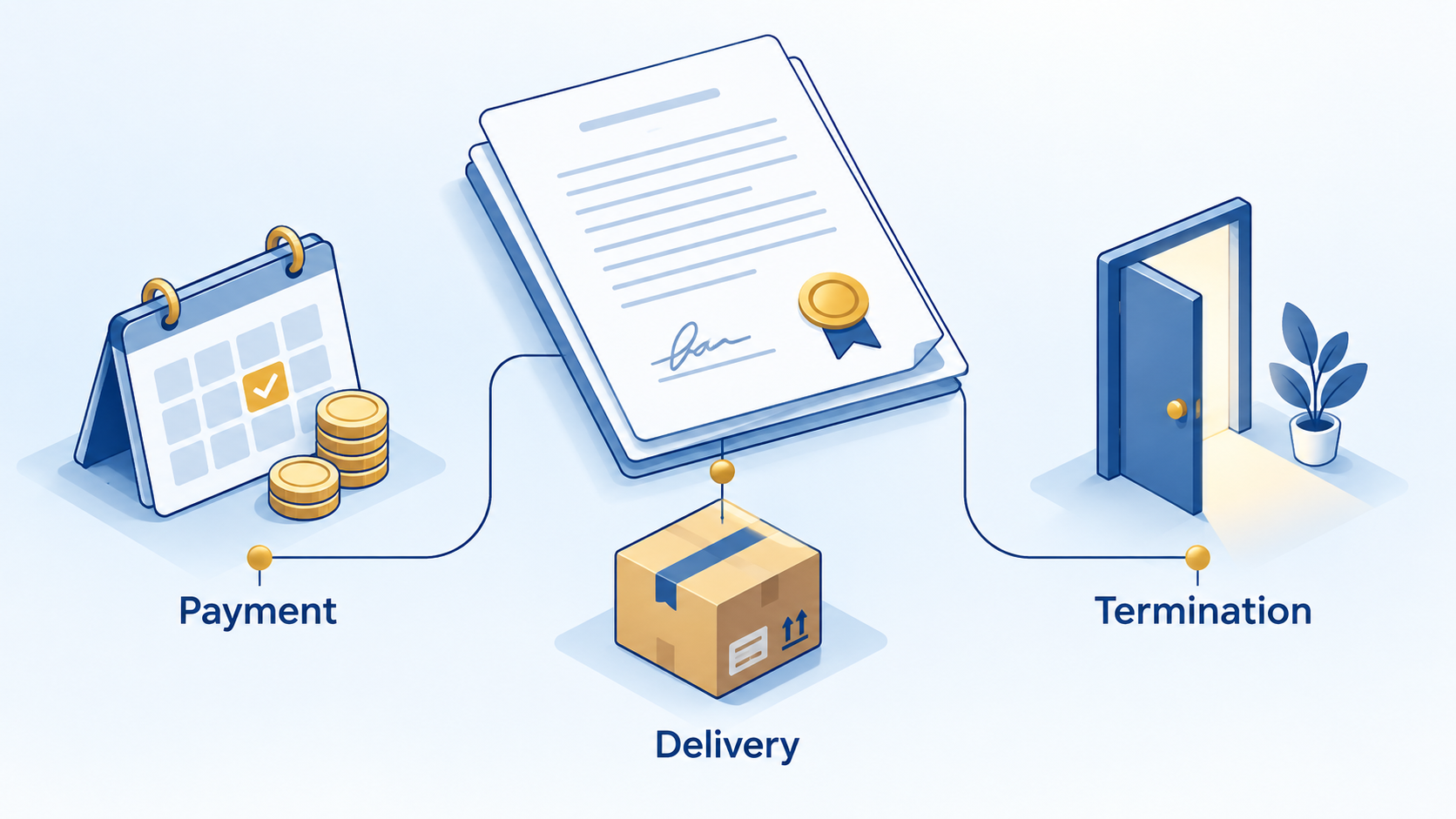
Payment delivery and termination clause concepts


How to review a contract clause step by step
Use a repeatable reading method so that unfamiliar wording becomes a list of concrete questions. Keep the original agreement unchanged and record the clause number beside every issue.
Identify the responsible party. Find who must act or who receives a right. Check defined terms such as “Supplier,” “Customer,” and “Affiliate” against the definitions section.
Identify the action and trigger. Separate what must happen from what starts the obligation. Delivery, receipt of an invoice, written approval, and acceptance may be different events.
Mark dates and conditions. Note the deadline, the unit of time, and whether business days or calendar days are specified. Record notice requirements separately.
Read exceptions and cross-references. Follow phrases such as “subject to,” “unless,” and “except as provided.” Open each referenced schedule or clause.
Write a plain-language question. Replace a vague objection with a question the other party can answer, such as “Which event starts the payment period?”
Escalate material uncertainty. Ask a qualified legal professional about terms that affect significant liability, ownership, restrictive obligations, or disputed rights.
Worked reading example: a payment clause
Illustrative sentence: “The customer will pay each undisputed invoice within 30 calendar days after receipt.”
The responsible party is the customer. The action is payment. Receipt is the trigger, and the stated period is 30 calendar days. The word “undisputed” introduces a condition that needs a closer look elsewhere in the contract.
A useful review note would ask: How must an invoice be delivered? Who receives it? What is the procedure for disputing an amount? Is the undisputed portion still payable if another part is challenged? These are reading questions, not assumptions about what the law requires.
Common mistakes to avoid
Reading a single paragraph without the definitions or attached schedule.
Replacing a defined term with a synonym that may change its scope.
Assuming a clause from an unrelated agreement fits the same transaction.
Treating a software edit as evidence that everyone agreed to a change.
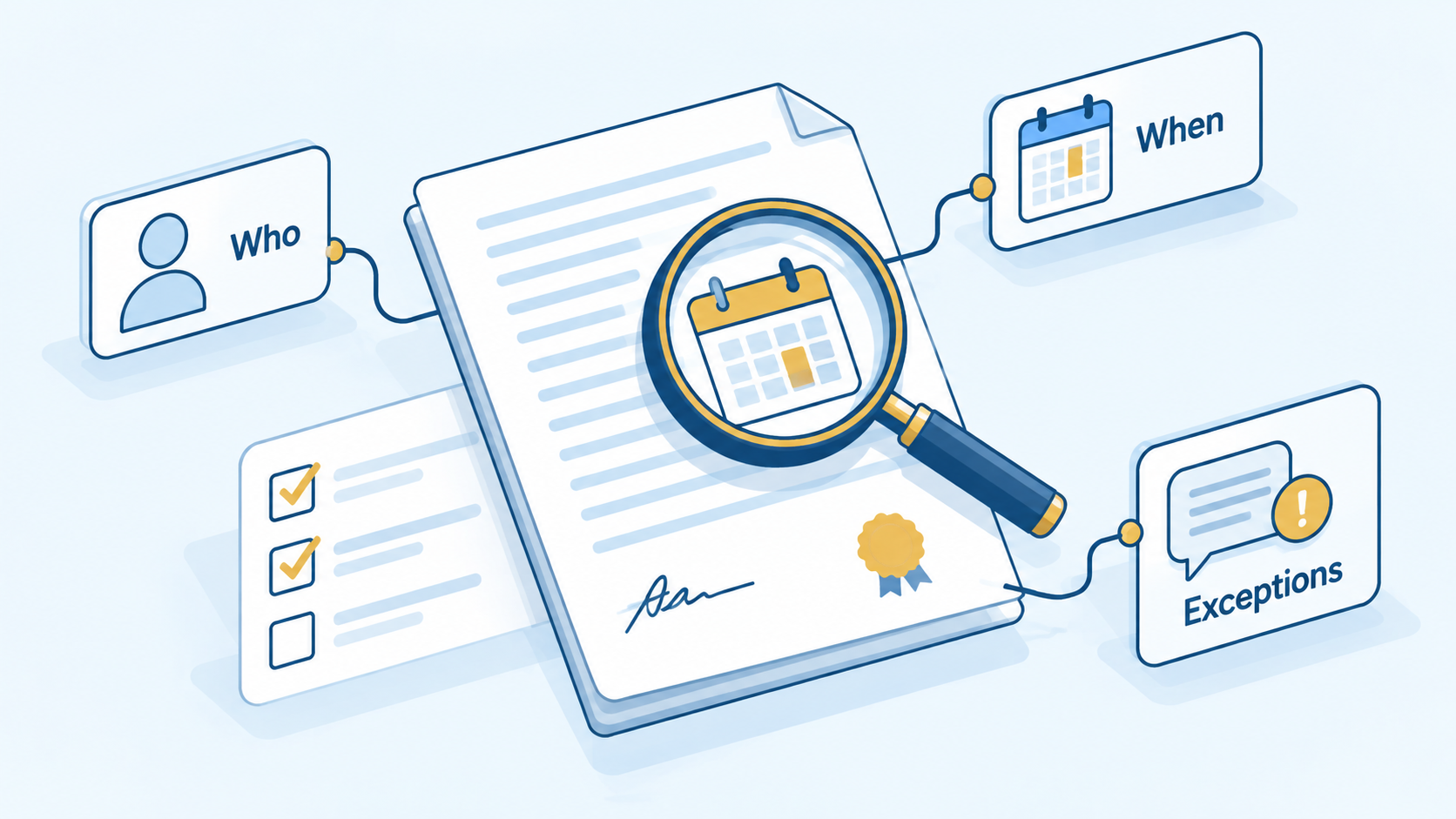
Review contract parties deadlines and exceptions
Organize your contract review with WPS Office
WPS Office can support the document work around a contract review: keeping an editable draft, preparing a list of questions, and exporting a reading copy. It does not determine whether a clause is legally suitable or enforceable.
Prepare a clear review copy
Save a separate working copy. Keep the received file and use a dated filename for your review version. If you have an editable DOCX, open that copy in Writer.
Create a review log. In a separate document, make columns for clause number, quoted wording, question, and agreed resolution. Copy only the text needed to identify the issue.
Make approved wording changes. Work from the editable source where possible. Recheck numbering, definitions, and cross-references after each revision.
Export a PDF for review. In Writer, use Menu > Export to PDF, choose the destination, and reopen the exported file to inspect the layout. See the WPS PDF export guide for the basic workflow.
If you only have a scanned PDF, keep it as the reference copy and request an editable source before substantial changes. For an already signed agreement, do not silently overwrite its text; follow the agreed amendment process and obtain appropriate review.
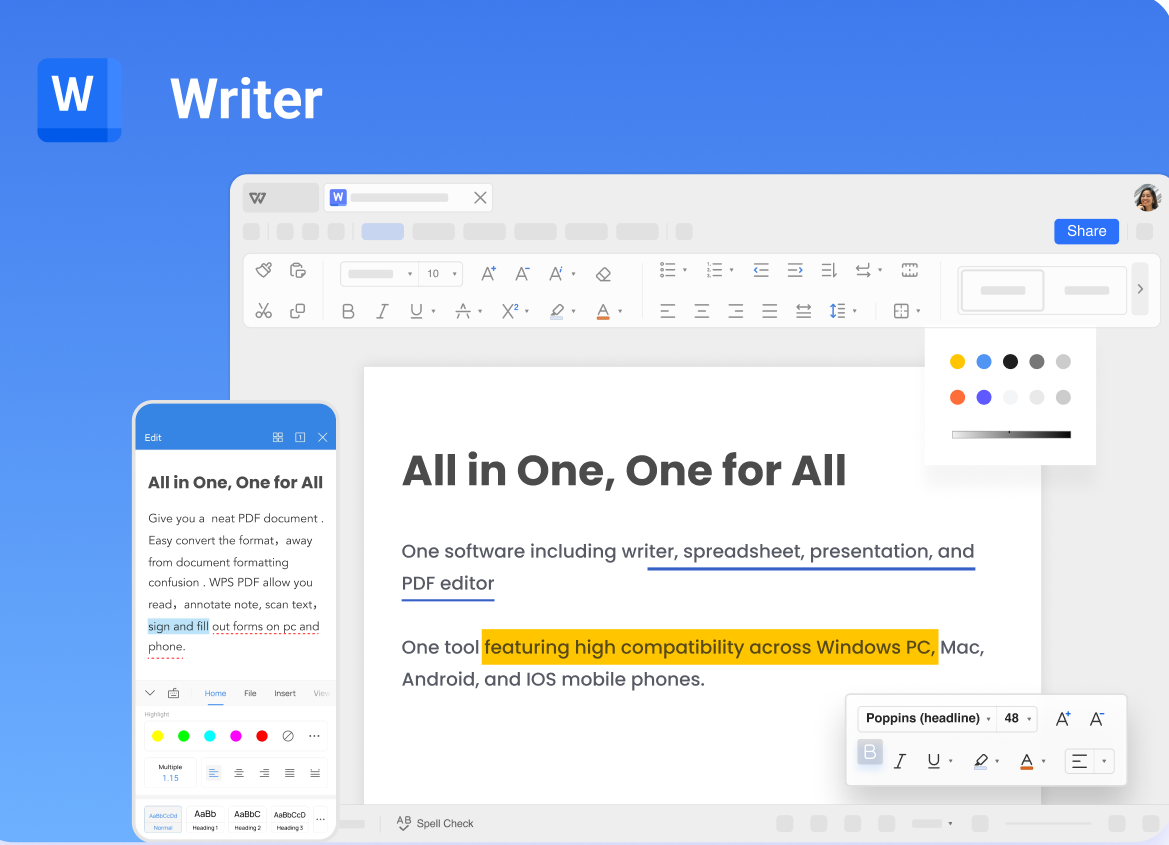
WPS Writer document editing product overview
FAQs
Is a clause the same as a contract?
No. A clause addresses a particular matter within an agreement. The contract contains the complete set of relevant terms, which may also include identified schedules or attachments.
Can a clause be more than one paragraph?
Yes. A clause may have several paragraphs or subclauses. Its role depends on what it addresses, not a fixed length.
What is the difference between a clause and a section?
A section is an organizational division. A clause is a provision addressing a matter. Drafting conventions vary, so a numbered section may contain one clause or several related provisions.
Can I change a clause after signing?
Check the contract's amendment requirements and applicable law. Editing the document alone does not establish an agreed amendment; seek appropriate advice and record any agreed change properly.
Does WPS Office check whether contract clauses are enforceable?
No. Use WPS for document preparation and review organization. A legal assessment requires the relevant facts, jurisdiction, and qualified professional judgment.


'%3e%3cpath%20d='M19.9911%204.11386V6.471H18.5894C18.0775%206.471%2017.7322%206.57814%2017.5536%206.79243C17.3751%207.00671%2017.2858%207.32814%2017.2858%207.75671V9.44421H19.9019L19.5536%2012.0871H17.2858V18.8639H14.5536V12.0871H12.2769V9.44421H14.5536V7.49779C14.5536%206.39064%2014.8632%205.53201%2015.4822%204.92189C16.1013%204.31177%2016.9257%204.00671%2017.9554%204.00671C18.8304%204.00671%2019.509%204.04243%2019.9911%204.11386Z'%20fill='%23333333'/%3e%3c/g%3e%3cdefs%3e%3cclipPath%20id='clip0_2938_8199'%3e%3crect%20width='16'%20height='16'%20fill='white'%20transform='translate(8%204.00671)'/%3e%3c/clipPath%3e%3c/defs%3e%3c/svg%3e)
'%3e%3cpath%20d='M17.5237%2010.7813L23.4811%204H22.0699L16.8949%209.88693L12.7648%204H8L14.2469%2012.9029L8%2020.0133H9.4112L14.8725%2013.7952L19.2352%2020.0133H24M9.92053%205.04213H12.0885L22.0688%2019.0224H19.9003'%20fill='%23333333'/%3e%3c/g%3e%3cdefs%3e%3cclipPath%20id='clip0_2938_8200'%3e%3crect%20width='16'%20height='16.0134'%20fill='white'%20transform='translate(8%204)'/%3e%3c/clipPath%3e%3c/defs%3e%3c/svg%3e)


