Research paper writing

How to Write a Research Paper: From Topic to Final PDF

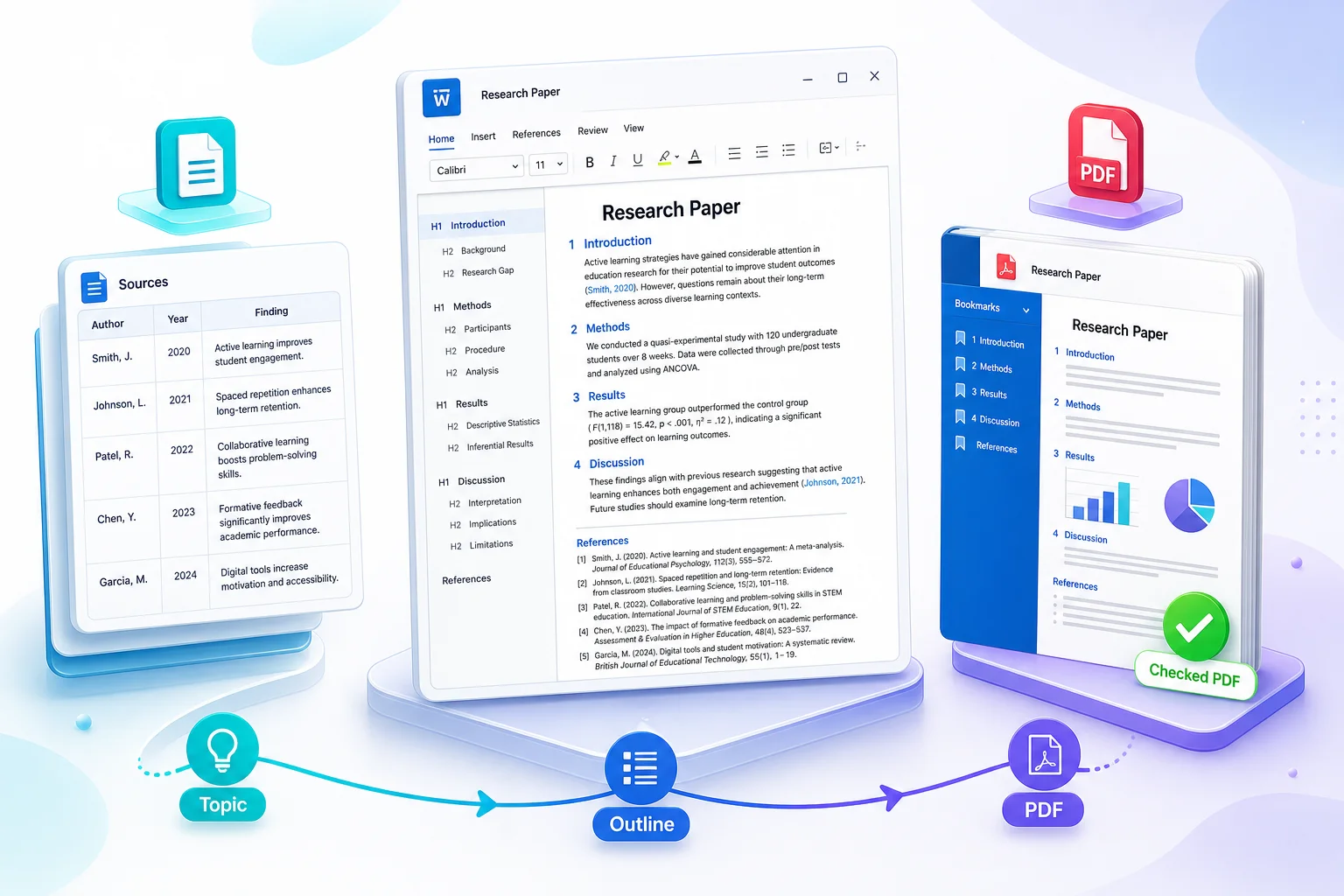
This page is the file path for a research paper: one research question, the right outline type (Argument, IMRaD, or Review), citations while you draft, then a PDF you open and check before upload. Scribbr-style writing tips stop at the draft. Here the last mile is the graded file. For essays, labs, and other academic paper types, use the academic writing guide.

Free Download Research Paper Tools
How to Write a Research Paper: From Topic to Final PDF

What is a research paper, and how do you start?

A research paper is not a summary of everything you read. It is one answer to one question, backed by sources or data. Start by reading the assignment, then narrow your topic before you search for more material.

What is a research paper?

A research paper presents an original answer to a focused question. It uses evidence from books, journal articles, surveys, experiments, or archives. Every borrowed idea gets a citation. The reference list at the end shows where each idea came from.

It is different from an essay because a research paper expects you to find and evaluate sources, not just state an opinion. It is different from a report because you must explain why your answer matters, not just list facts.

How to start a research paper

Do not open a blank document and start typing. Follow this order on day one:

  1. Read the assignment sheet. Note length, citation style, source count, and upload format.
  2. Pick a topic area, then write one research question your paper can answer.
  3. Sketch a rough outline with 4 to 6 section headings.
  4. Search for 3 to 5 starter sources. Open them in Chat PDF and log what each one says.
  5. Only then start drafting the body sections.

Task word

Analyze, compare, evaluate, or investigate. This word tells you whether your paper argues, reports data, or reviews sources.

Word or page limit

A 2,000-word paper needs a narrower question than a 5,000-word paper. Write the limit down before you outline.

Citation style

APA, MLA, Chicago, or IEEE. Use one style for the whole file. See the APA format guide if you need APA.

Source rules

Peer-reviewed only, minimum count, or year range. Log each source in a table before you draft.

AI rules

Some courses allow AI for reading and outlining. Others ban it. Follow the syllabus. Never submit a full AI draft as your paper.

Upload format and file name

Word or PDF, plus the name the portal wants. Export to PDF if they ask for PDF.

Assignment Is it a research paper? What you must do
Research paper Yes Answer one question with sources or data you evaluate, cite, and format for upload.
Essay Usually no Argue a position. Sources may be lighter. See the academic writing guide if the prompt is an essay.
Lab report Related (IMRaD) Report what you did and found. Use the IMRaD outline on this page.
Literature review Yes, if graded as research Synthesize sources by theme. Use the Review outline, not one heading per article.

Research question formula

who or what you study + what you measure or compare + where and when + within what limits

If your question still has words like "people," "society," or "technology," it is too broad for one research paper.

Research question vs thesis

Ask first. Answer second.

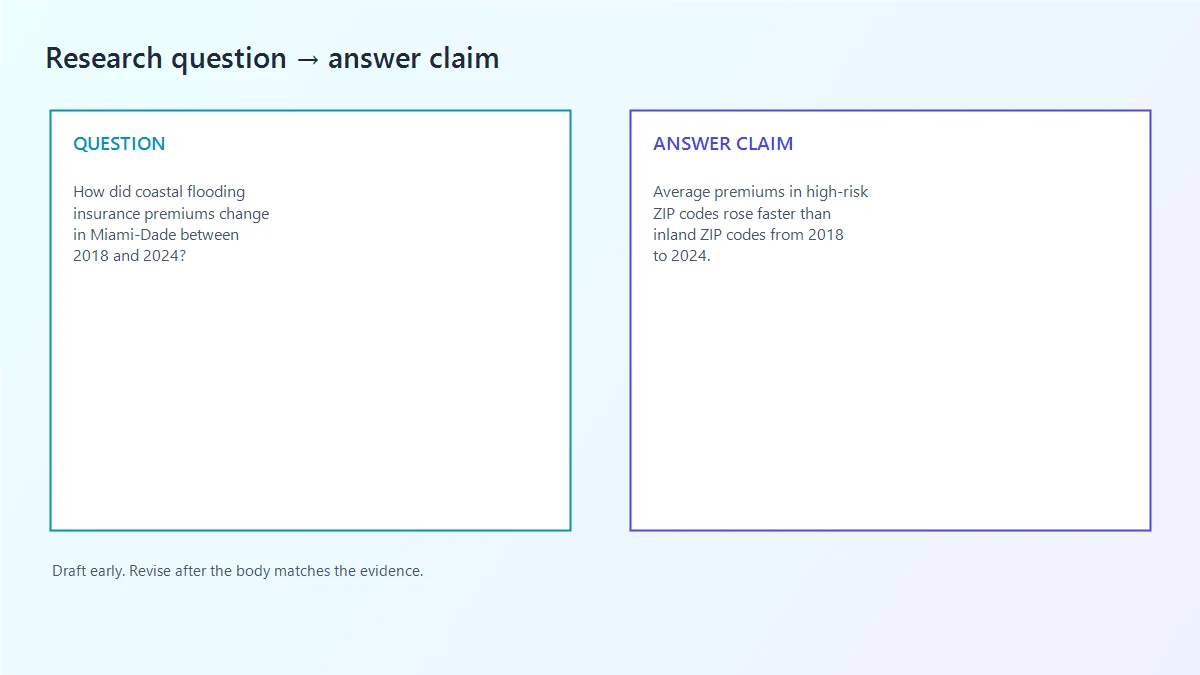
A research question is what you investigate. A thesis (argument papers) or answer claim (empirical and review papers) is the one-sentence answer you can defend with sources or data. Do not lock a thesis before you have read anything. Draft an answer after starter sources, then revise it when the body is finished.

  • Argument paper: thesis = debatable claim the body must prove.
  • Empirical / IMRaD paper: keep the research question (and hypothesis if required) in the introduction; the answer appears in Results and Discussion.
  • Review paper: answer claim = what the literature shows about the gap you named.

Question: How did coastal flooding insurance premiums change in Miami-Dade County between 2018 and 2024?

Answer claim: Average premiums in high-risk Miami-Dade ZIP codes rose faster than inland ZIP codes from 2018 to 2024, based on county and insurer reports.

Turn a research question into a one-sentence thesis or answer claim
Too broad for one paper Ready to research
Climate change effects How did coastal flooding insurance premiums change in Miami-Dade County between 2018 and 2024?
Remote work productivity Did task completion rates differ between hybrid and fully remote software teams at one mid-size company in 2025?
History of the Cold War How did U.S. newspaper editorials in March 1947 frame the Truman Doctrine for domestic readers?
AI in education What policies did the top 20 U.S. universities publish on generative AI use in coursework during 2024?

Do this

Strong research paper habits

Source table before drafting

Log author, year, finding, and how you will use each source before you write paragraphs.

One question controls the paper

Every heading should help answer that one question. Delete the rest.

Cite while you write

Add the citation in the sentence on the same day you use the idea.

One citation style

APA, MLA, Chicago, or IEEE for the whole file. Do not mix them.

Draft the body first

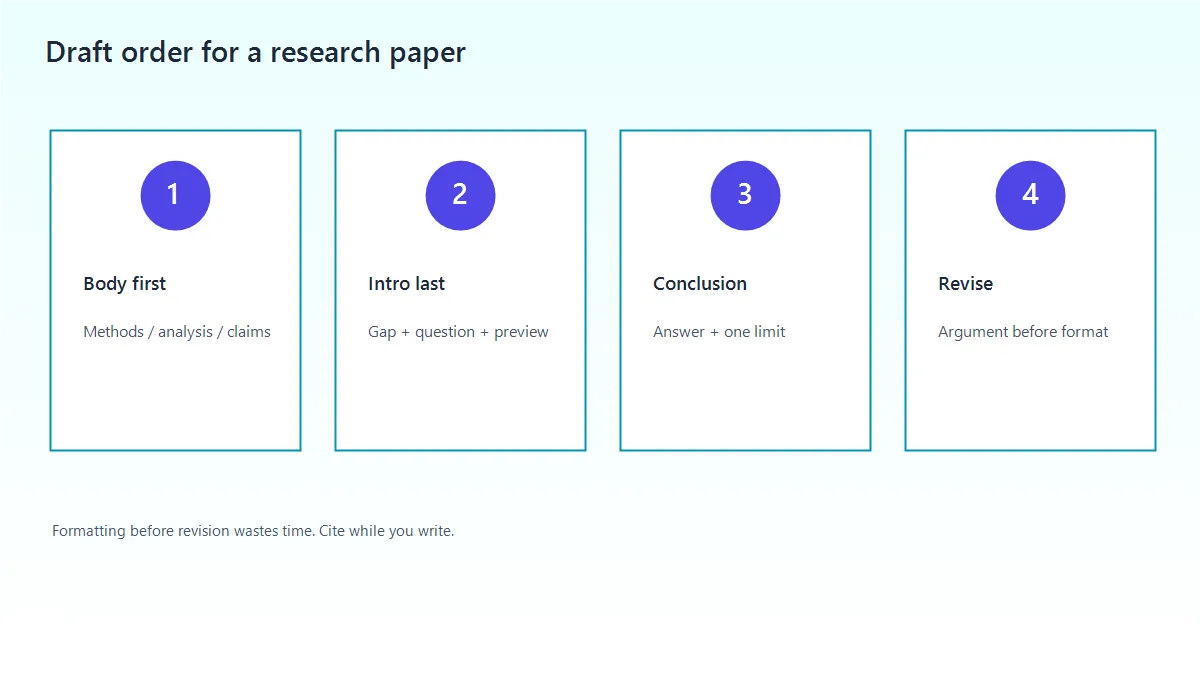
Write methods, results, or main analysis before the introduction. The intro should match what you actually wrote.

Avoid this

Common early mistakes

Starting with the introduction

You do not know what the paper says yet. Outline and draft the body first.

One paragraph per source

That is a source list, not a research paper. Group ideas by theme or argument.

Saving citations for the end

You will forget where ideas came from. Cite as you draft.

Using only websites

Most assignments require journal articles or books. Check the source rules first.

For broader writing skills beyond research papers, see the academic writing guide.

Research paper outline: pick one format

Your research paper outline is the skeleton of the final file. Pick one format below, write real headings, then download a sample that matches your assignment.

Argument outline

Use when the assignment asks you to analyze, evaluate, or take a position on a question.

Sections: title, introduction with thesis, 3 to 4 body sections (one claim each), counterargument if required, conclusion, references.

Intro job: state your answer in one or two sentences, then preview how each section supports it.

IMRaD outline

Use when you collected or analyzed data: lab work, surveys, experiments, or a course study.

Sections: title, abstract if required, Introduction, Methods, Results, Discussion, references.

Rule: Methods = what you did. Results = what you found. Discussion = what it means. Do not mix them.

Review outline

Use for a literature review or source-based research paper. Group sources by theme, not one heading per article.

Sections: title, introduction naming the gap, 3 to 5 theme sections, synthesis paragraph, conclusion, references.

Rule: listing paper A, then B, then C is a bibliography, not a research paper.

Paper type Research paper outline to use Sample download
Argument research paper Argument outline. Thesis plus 3 to 4 supporting sections with citations. Download .docx
Empirical research paper IMRaD outline. Introduction, Methods, Results, Discussion. Download .docx
Thesis / dissertation Match the chapter: methods use IMRaD; discussion uses argument outline. Download .docx
Research proposal Review outline for background, then IMRaD for proposed methods. Download .docx
Literature review paper Review outline. Group sources by theme, not by author. Download .docx
Lab report IMRaD outline. Keep methods, results, and discussion separate. Download .docx
Annotated bibliography Source table before the paper. One row per source. Download .docx

Every research paper format shares two rules

  • Science and social science papers use IMRaD more often. Humanities papers use argument outlines more often.
  • Both still need one research question, real headings, and one citation style.
  • Your research paper format must match the assignment, not a template you found online.

Build your research paper outline in WPS Writer.

Download free

Write the research paper in four visible steps

All four steps stay on the page (not hidden behind tabs). Work sources, outline, draft, then format and PDF.

1

Stage 1

Find sources and log them in a table

Before you draft, collect enough sources to answer your question. Keep a source table so you know what each paper contributes.

Where to find sources

Start with your library databases and Google Scholar, then course reserves, government or NGO reports, and primary documents if the assignment allows them. Prefer peer-reviewed journals when the syllabus asks for scholarly sources. Do not cite Wikipedia as evidence. Use it only to find better sources in the footnotes.

Source table columns

Add one row per paper: source (author, year), their question, method, main finding, limit they mention, and how you will use it. If you cannot fill the last column, stop taking notes on that source.

Verify the page

Use ChatPDF to fill the middle columns faster. Then open the page it points to and check. If you cannot see the page, do not cite the claim.
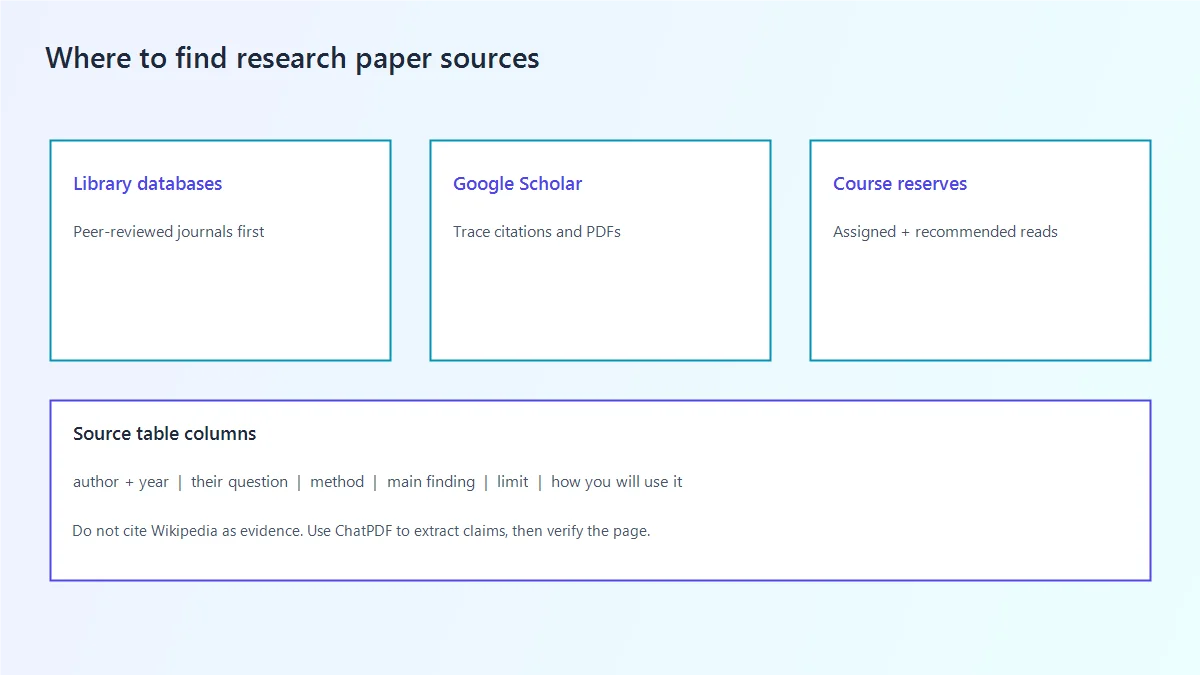
Find sources in library databases and Google Scholar, then log them in a source table

Finish the argument first. Tools come after the checklist.

Use the outline samples above if you need a heading skeleton. Download the suite only when you are ready to format and export the file.

Research paper checklist before upload

Use this research paper checklist before you submit. Tap each item to track progress in this browser.

Progress 0 / 12

Question and outline

Evidence

File

Finish the checklist, then use the four finish steps below to format and export the PDF.

Free Download

Finish the research paper file in WPS Office

After the checklist, use four tools that match the job: read sources, write the draft, apply one style, export a checked PDF. You still own the question, the sources, and every sentence you submit.

1 Source PDFs 2 Outline & draft 3 One citation style 4 Word to PDF check
1 Fill the source table from PDFs

Upload journal PDFs to ChatPDF to pull claims into your source table faster. Then open the cited page and verify. If you cannot see the page, do not cite the claim. This step supports research, not automatic paper generation.
Use ChatPDF to extract claims into a research paper source table
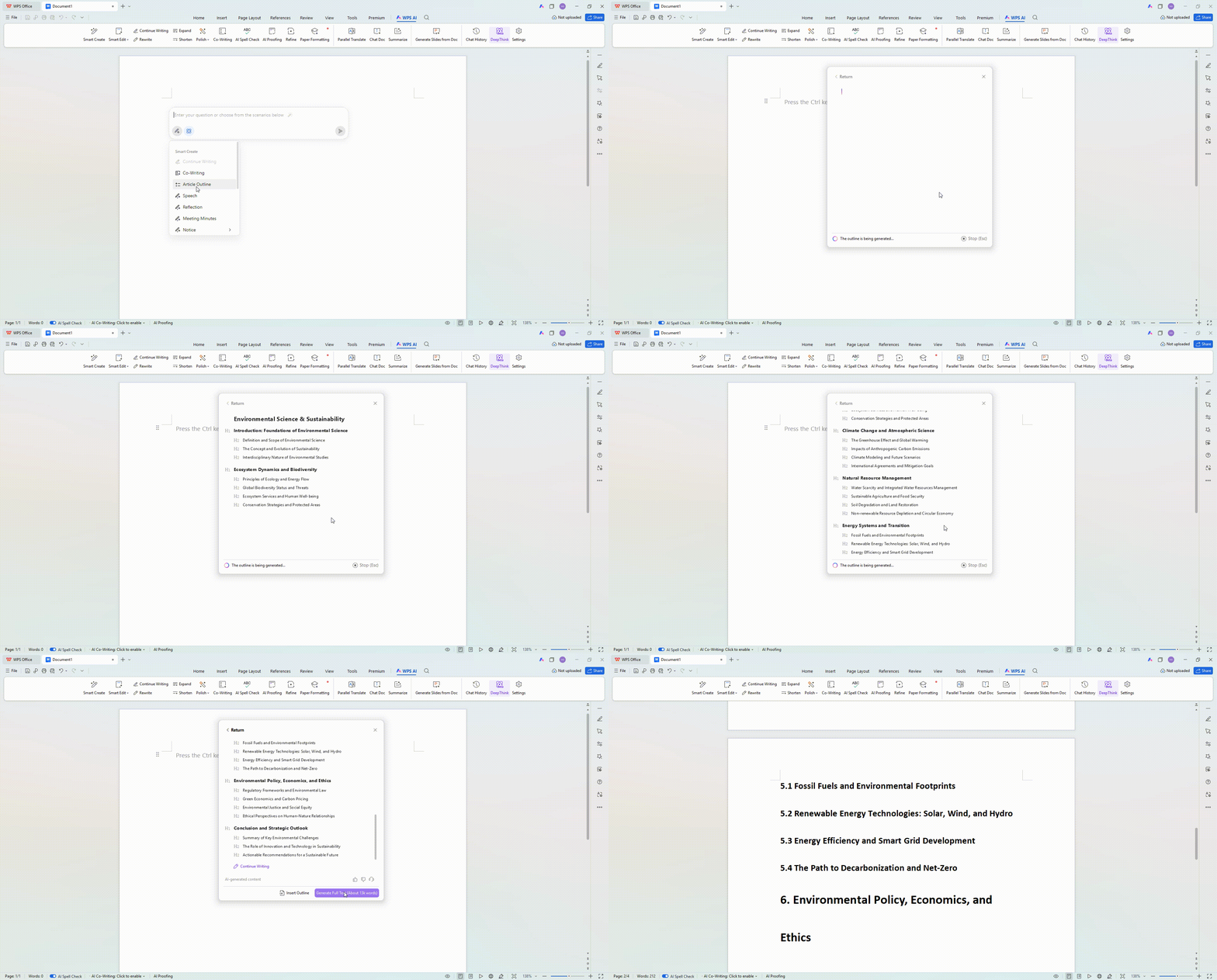
Build research paper headings in WPS Writer
2 Outline and draft in Writer

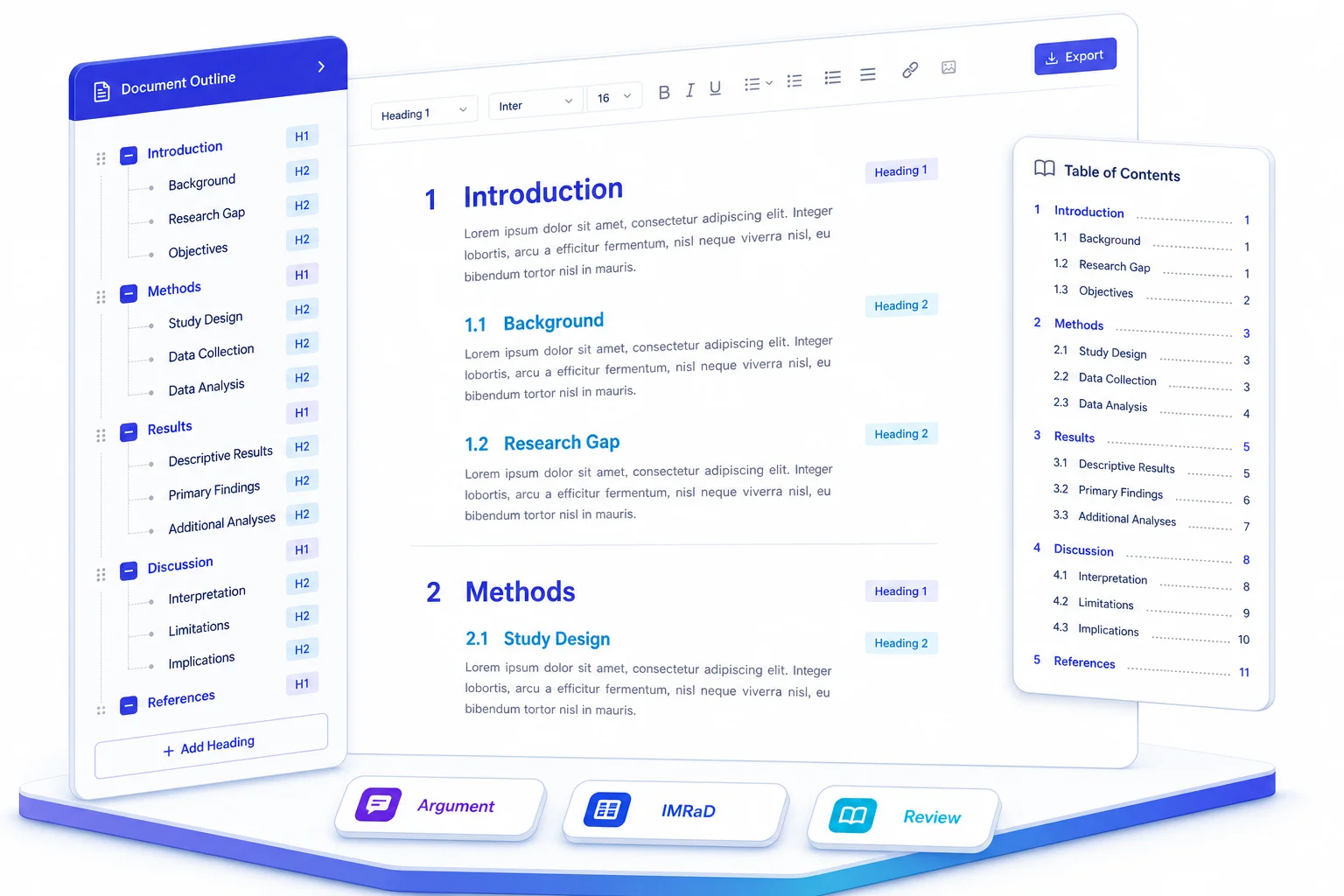
Build Heading 1 and Heading 2 from your Argument, IMRaD, or Review outline in WPS Writer. Draft the body first. Cite in the sentence on the same day you use an idea. If you use AI Writer for a heading list or a stuck paragraph, rewrite in your own words and delete invented sources.

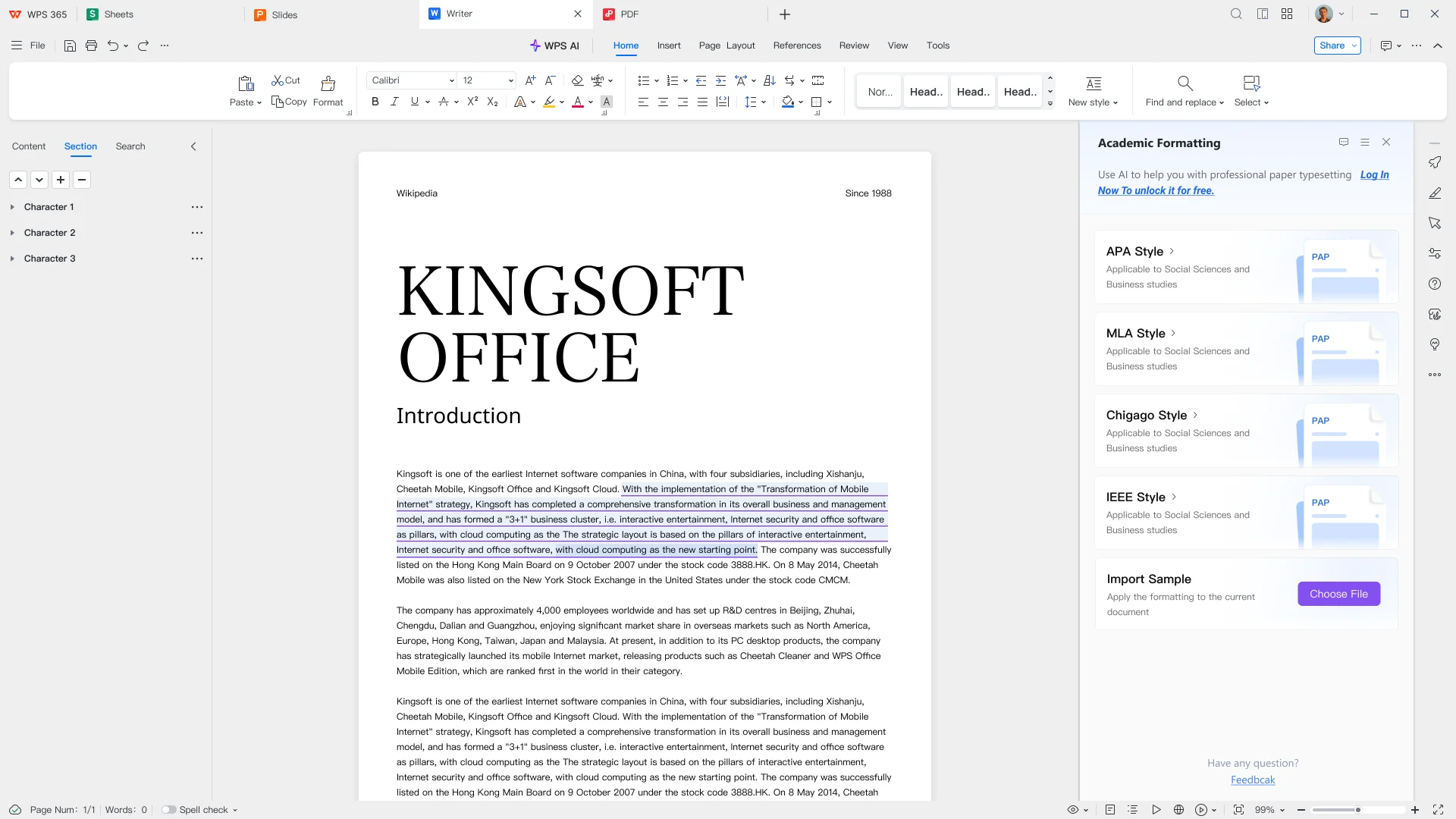
3 Apply one citation style

Use WPS Academic Formatting for the style named in the assignment (APA, MLA, Chicago, or IEEE). Then skim the title page, headings, and reference list yourself. Layout tools speed setup. They do not verify that every citation matches a real source.

Apply APA or MLA academic formatting in WPS Writer
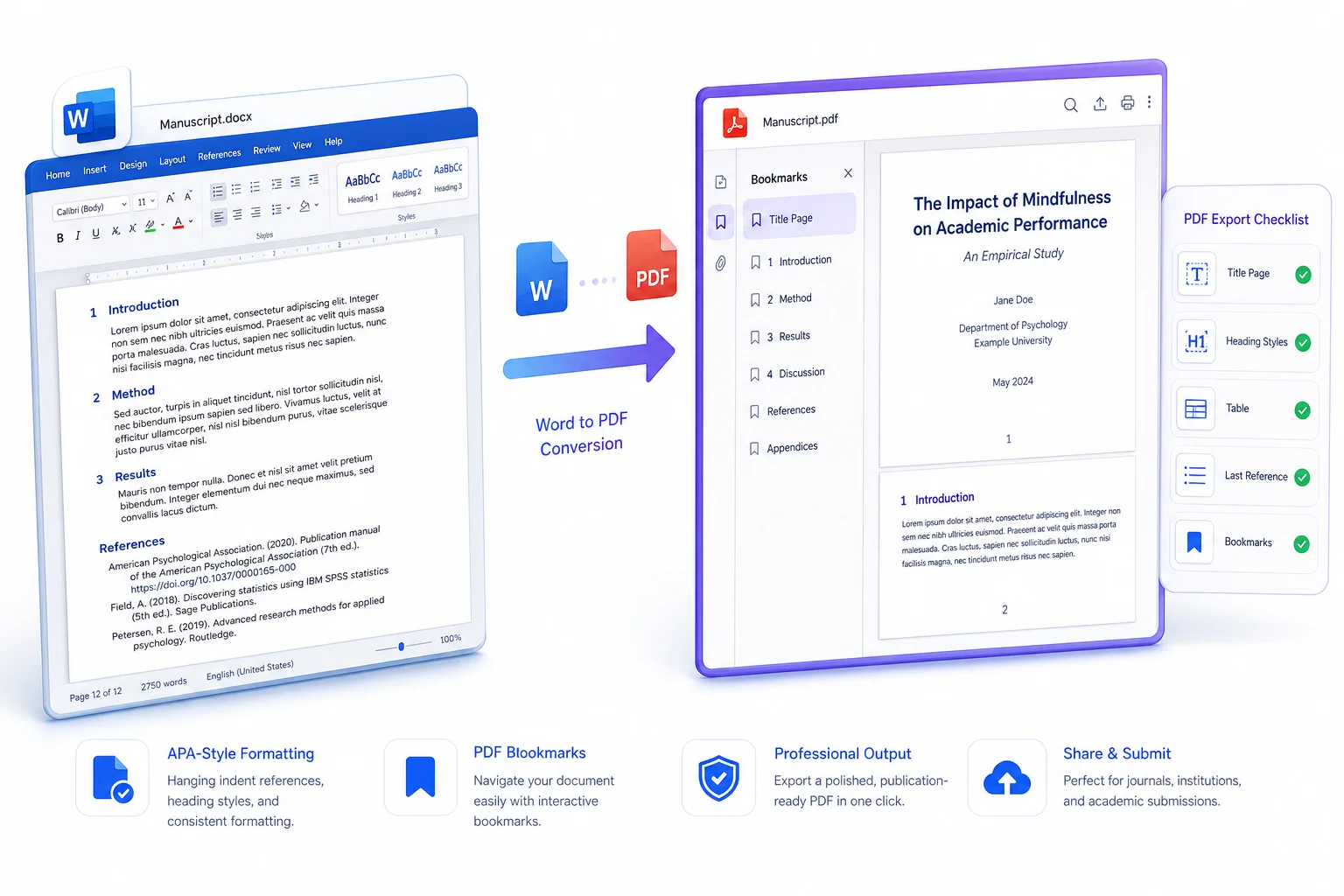
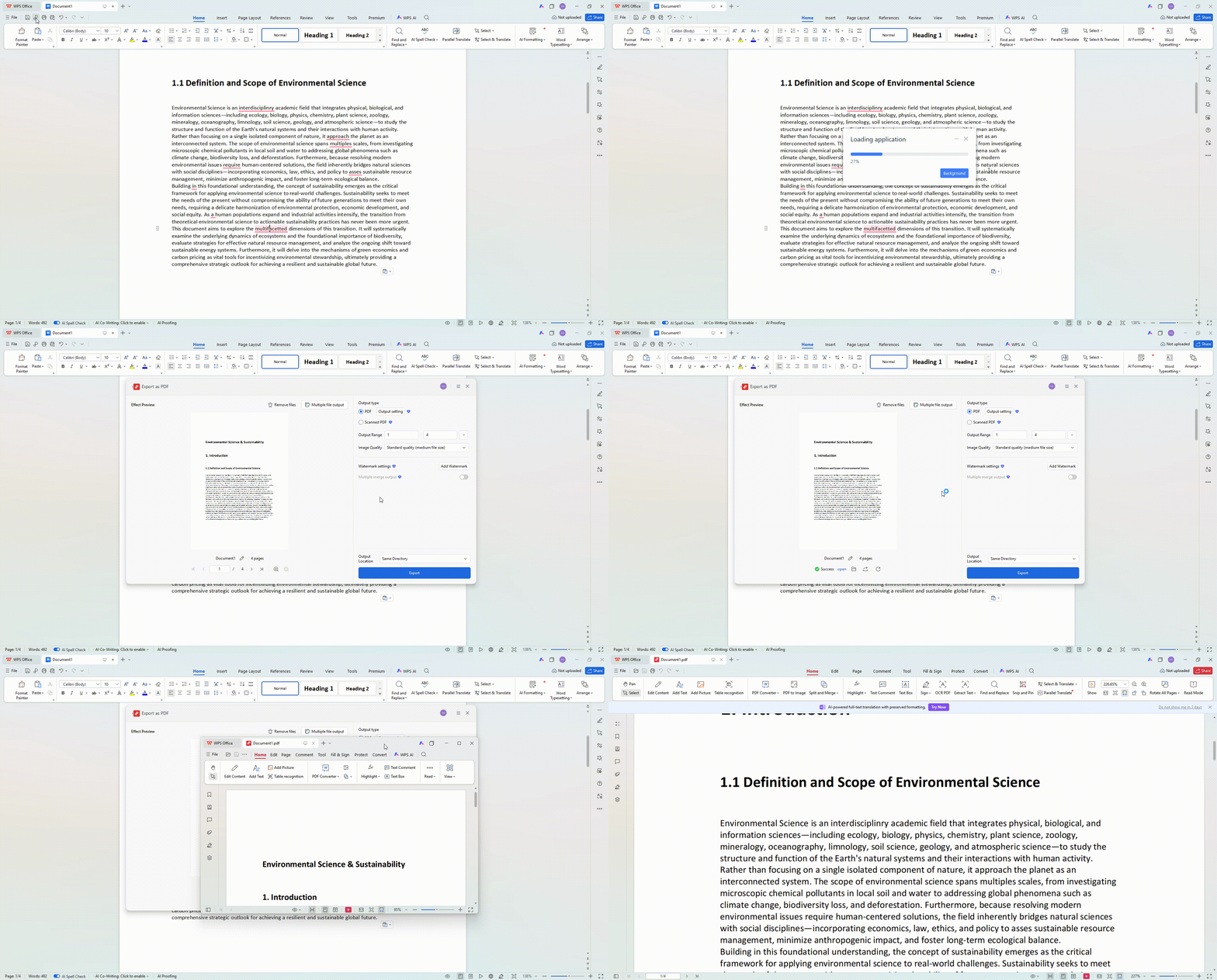
Export research paper with Word to PDF and check bookmarks
4 Export and check the PDF

Convert with Word to PDF. Open the file and check the title page, first heading, one table or figure, last reference, and bookmarks. Small fixes can go through PDF editing without rebuilding the whole draft.

FAQ

Common questions

What a research paper is, how to start, where to find sources, thesis vs question, outline format, length, AI rules, and how this page differs from academic writing.

Finish the research paper you will be graded on

Write your research paper in WPS Writer, apply the required format, and upload a PDF you have already opened and checked.

detail_banner_pc