

Your teacher assigns five paragraphs, the clock is ticking, and the blank page keeps staring back. A persuasive essay feels hard because it asks you to do three things at once: take a clear stance, back it with evidence, and answer the people who disagree with you. Do them in the right order, and the assignment becomes a checklist instead of a struggle.
This guide walks through what a persuasive essay is, a reusable outline, a step-by-step writing process, ways to sharpen your argument, and how to draft and format the whole thing for free in WPS Writer.
How to Write a Persuasive Essay: A Step-by-Step Guide
What Is a Persuasive Essay?
A persuasive essay is a short academic paper that argues one clear position and tries to move the reader toward it using logic and evidence. Unlike an expository essay, which explains a topic from both sides, a persuasive essay picks a side on a debatable issue and defends it from the first sentence to the last.
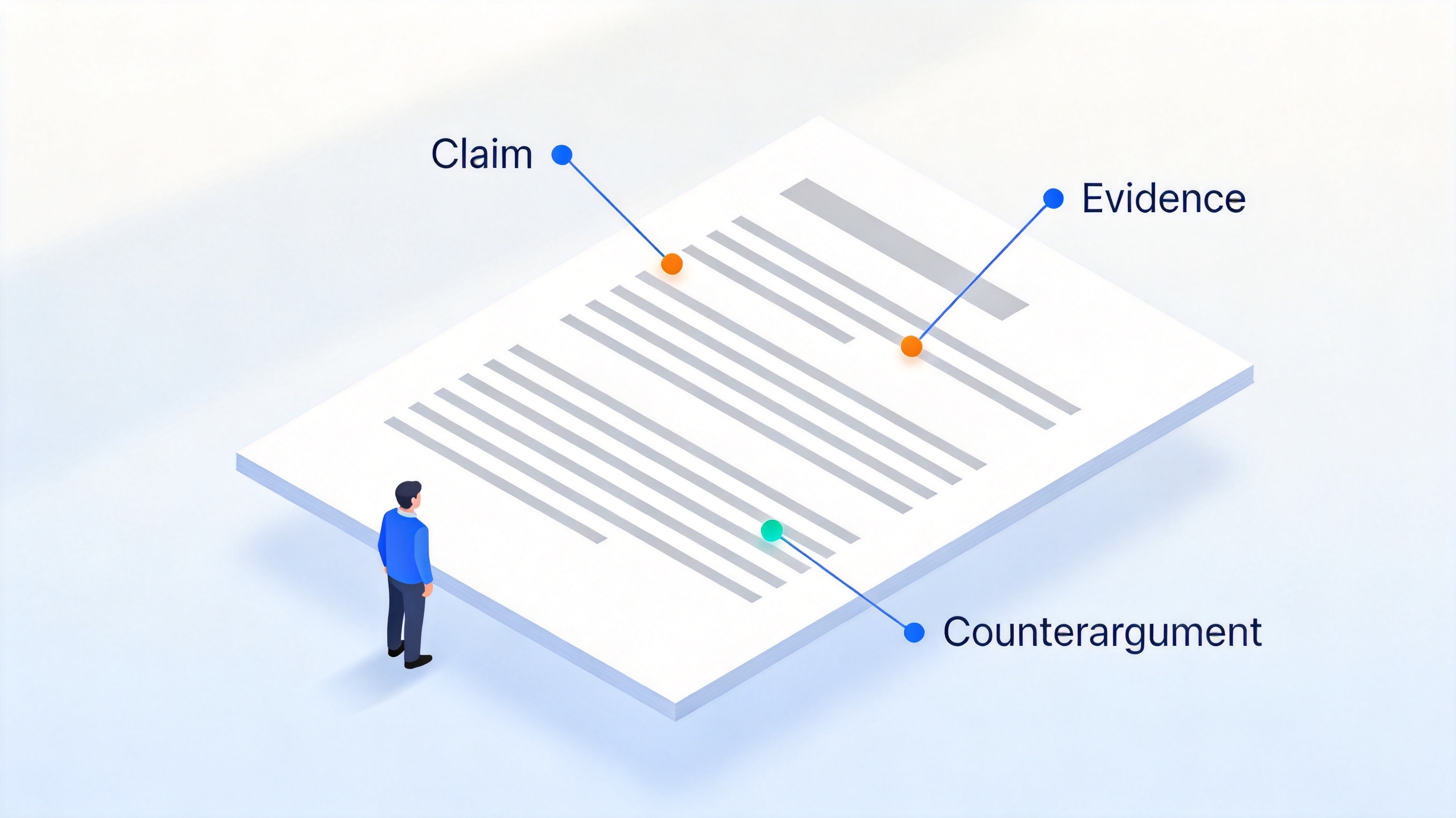
Three elements carry the argument. A claim is the stance you take. Evidence is the facts, statistics, and expert quotes that support it. A counterargument is the strongest objection a skeptical reader could raise, answered openly instead of ignored. Teachers grade persuasive essays on how well these three work together, not on how loudly you state your opinion.
Persuasive essay claim evidence counterargument


Persuasive Essay Outline That Works
A five-paragraph outline fits most school assignments, and the same skeleton scales up for longer papers:
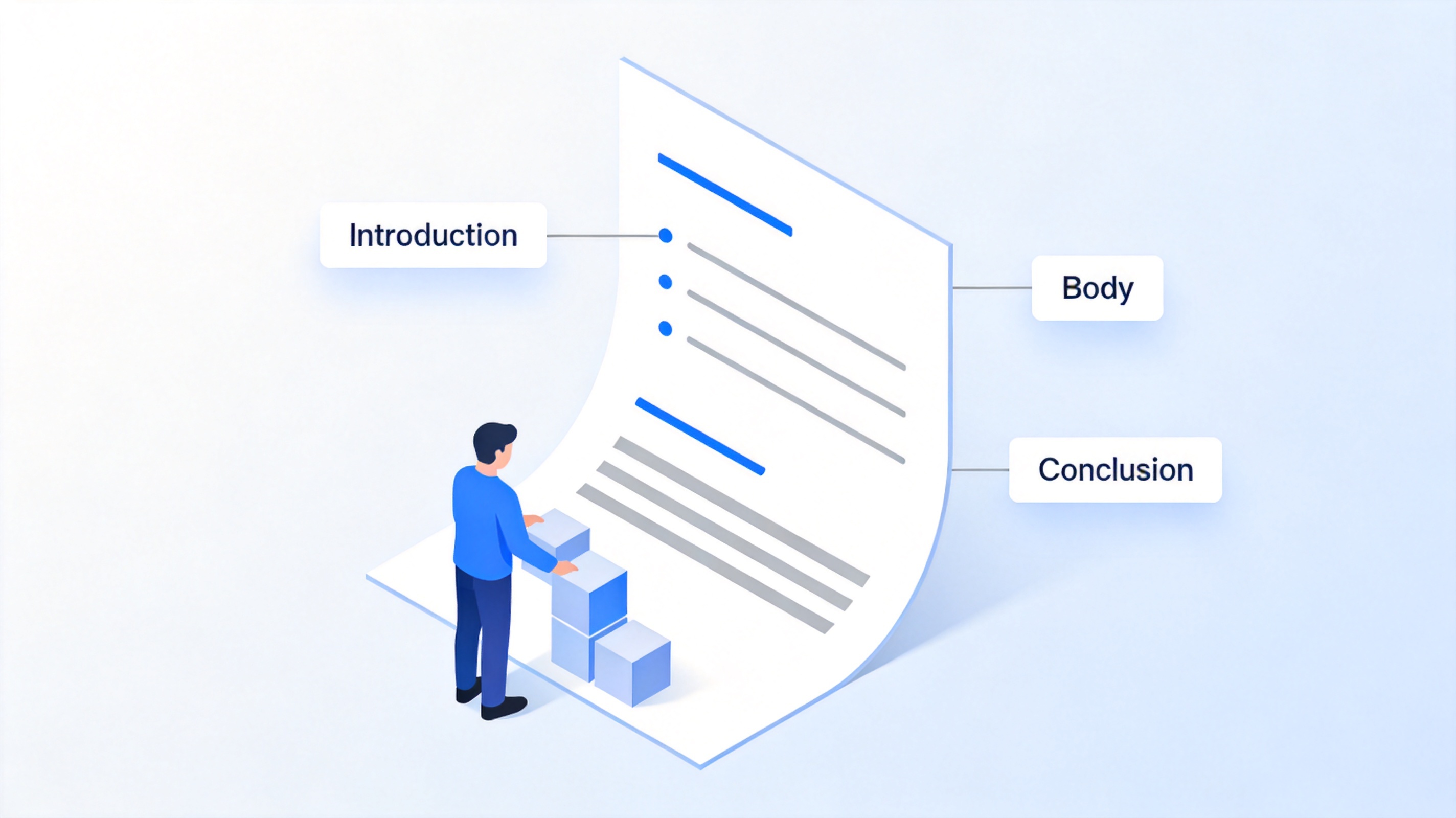
Introduction: a hook that grabs attention, one or two sentences of background, and your thesis statement—the single sentence that states your position.
Body paragraphs (2–3): one supporting point per paragraph, each opened by a topic sentence and developed with evidence and explanation.
Counterargument paragraph: the best objection to your view, then your rebuttal showing why your position still holds.
Conclusion: restate the thesis in fresh words, summarize the main points, and end with a call to action or a memorable final thought.
Build the outline before you write full sentences. Decide which point is strongest and lead the body with it, or save it for last if it needs the most explanation. Formatting rules such as headings and spacing are usually set by your teacher; our guides to the essay cover page and MLA essay headings cover the rest of the layout.
Persuasive essay outline introduction body conclusion
How to Write a Persuasive Essay Step by Step
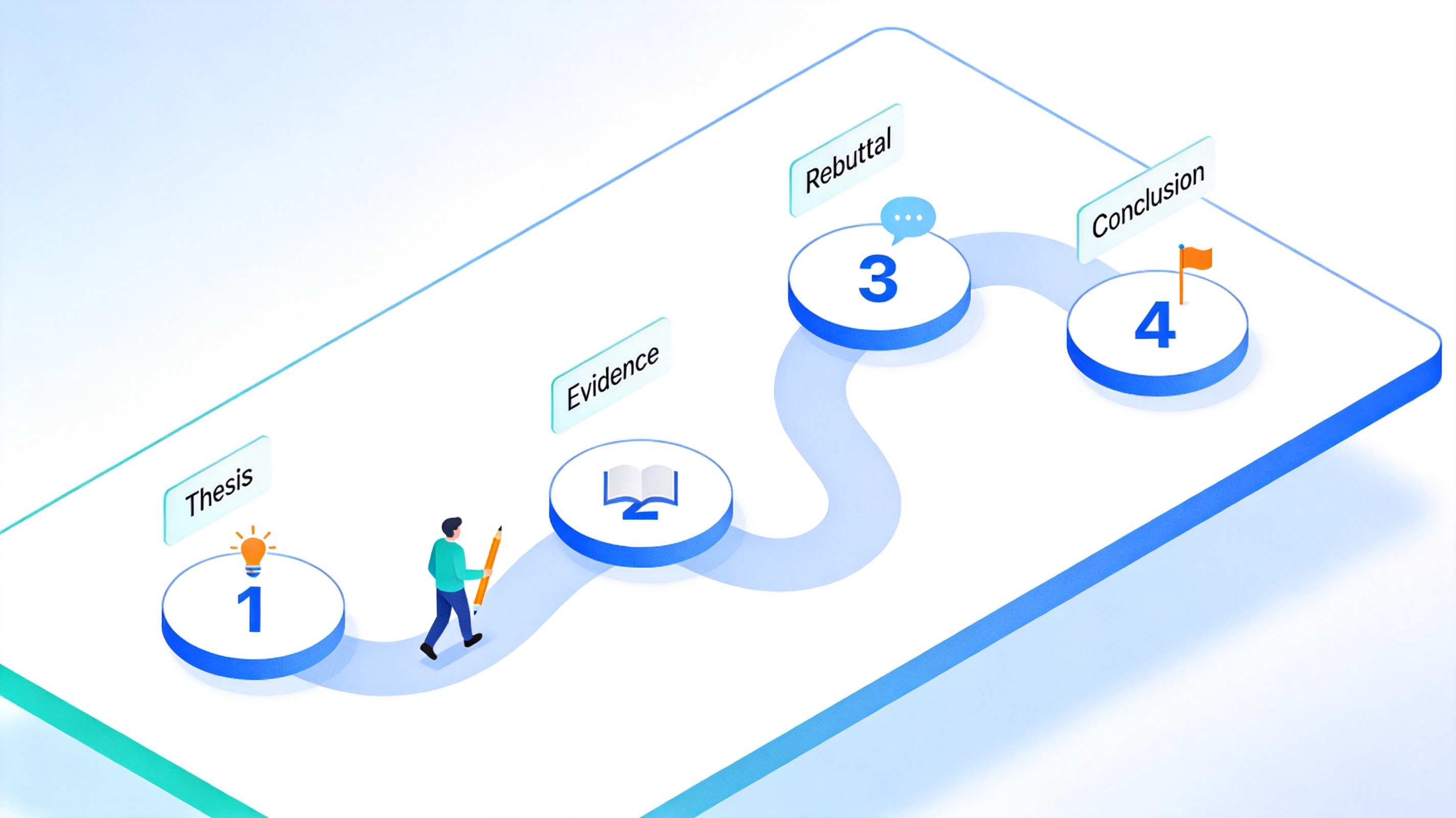
With the outline in place, writing a persuasive essay becomes a sequence of short, focused tasks:
Pick a debatable topic. Choose an issue people genuinely disagree about and that you can research with credible sources. "School uniforms should be mandatory" works; "uniforms exist" does not, because no one can argue with it.
Write a specific thesis. State your position plus the main reason in one sentence, such as "Schools should require uniforms because they reduce bullying and morning stress." A thesis must be arguable and give your essay a roadmap.
Open with a hook. Start your introduction with a surprising statistic, short anecdote, or provocative question, add one line of context, then land on your thesis as the final sentence of the paragraph.
Build body paragraphs around one point each. Follow the pattern: topic sentence, evidence (quote, statistic, or example), explanation of why it supports the thesis, and a transition to the next paragraph.
Answer the counterargument. Name the strongest objection fairly, then rebut it with evidence or logic. Conceding a small point while holding your main position actually makes you more credible.
Close with purpose. Restate the thesis in new words, pull your main points together in two or three sentences, and end with a call to action or a line that makes the reader care.
How to write a persuasive essay steps
How to Strengthen Your Persuasive Essay
A solid draft persuades; a polished one convinces. Three upgrades make the biggest difference:
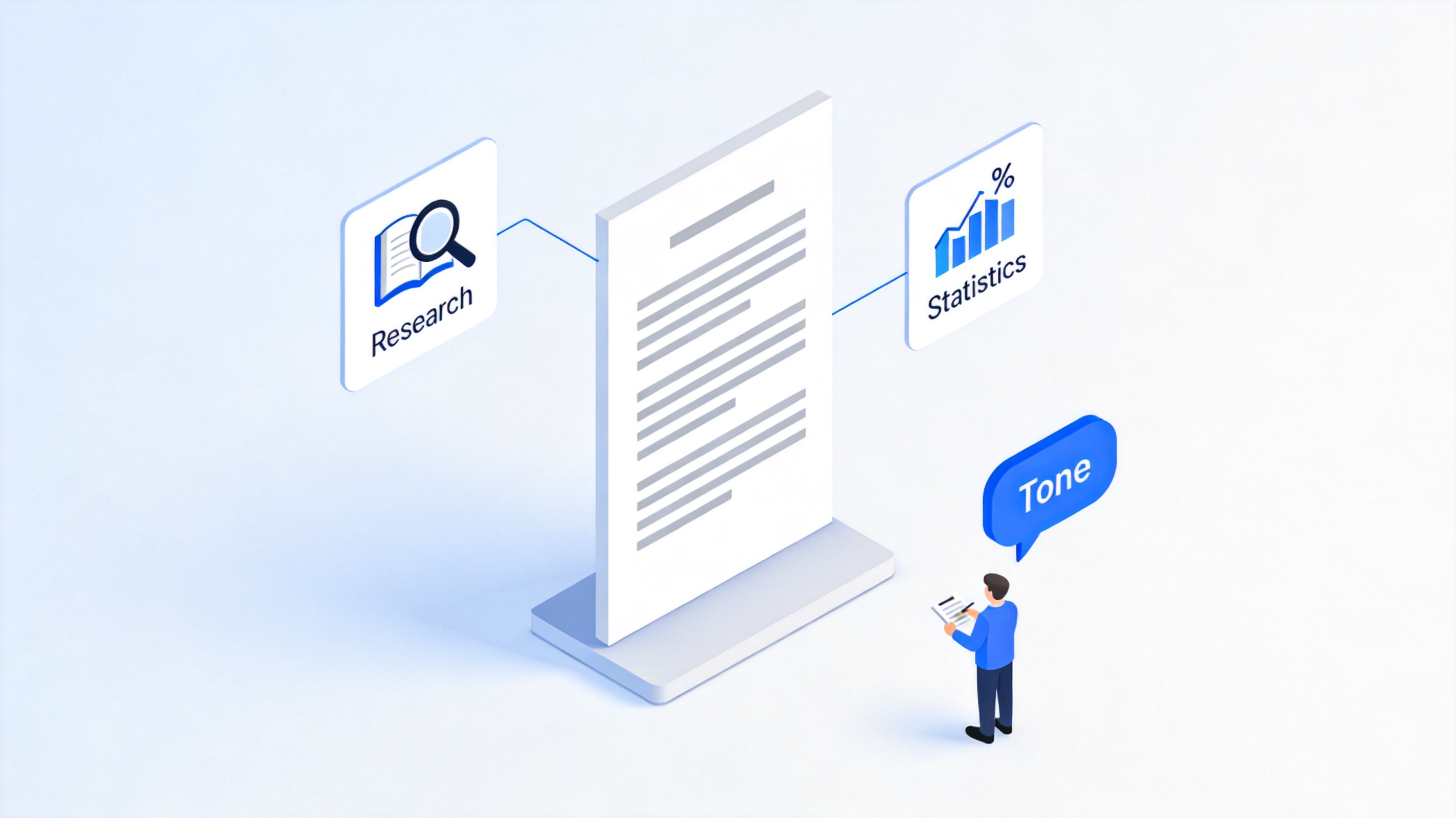
Research before you argue. Read beyond your first search result and take notes on both sides of the issue so your rebuttal is informed, not defensive.
Prefer statistics to adjectives. "Many students skip breakfast" is weak; "About three in four high school students skip breakfast, according to CDC survey data" gives the reader something to check.
Control your tone. Confident beats aggressive. Replace insults and absolutes ("everyone knows") with measured claims ("the evidence suggests"). Rhetorical appeals help here: logic carries your evidence, credibility comes from fair sourcing, and emotion belongs in the hook and conclusion—not as a substitute for facts.
After revising, run a self-edit for repetition and weak verbs, and read the essay aloud to catch sentences you stumble over. If a paragraph still feels tangled, an essay rewriter can help you rephrase a draft without losing your voice—then verify every fact and citation yourself.
Strengthen persuasive essay research statistics tone
The Best Free Alternative: WPS Office for Persuasive Essays
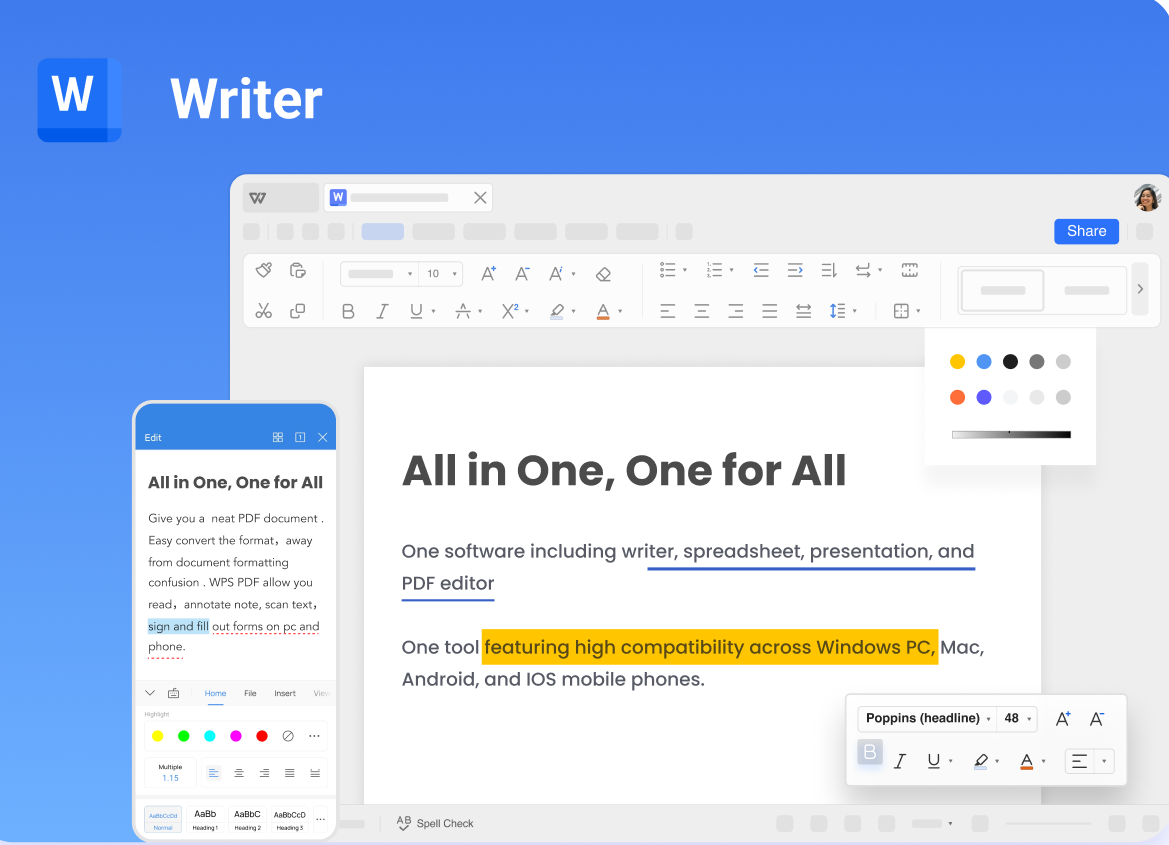
You do not need a paid Office subscription to write a persuasive essay well. WPS Office is a free office suite whose word processor, WPS Writer, opens and saves .docx files with a Microsoft-like ribbon interface, so you can work on school computers, your laptop, or your phone and keep the same formatting throughout.
For this assignment specifically, Writer covers every stage of the process:
Essay templates: start from built-in document templates instead of a blank page, so margins, spacing, and headings are already set up.
Live word count: the status bar shows characters, words, and pages as you type, which keeps you inside a 500-word or 1,000-word limit without manual counting.
Comments and Track Changes: ideal for peer review—one classmate suggests edits in the margin, and you accept or reject each one.
Citation-ready formatting: set MLA or APA style with line spacing, headers, and page numbers in a few clicks, then export a clean PDF for submission.
WPS AI (optional): can outline or draft text on request. Treat it as a brainstorming partner, and remember that an AI essay writer works best when you review, verify sources, and rewrite in your own voice.
WPS Writer
FAQs
Can I use first person in a persuasive essay?
Usually yes, but sparingly and only if your teacher allows it. Arguments stand on evidence, not on "I think"—many strong persuasive essays never use "I" at all. Check your assignment sheet first.
How long should a persuasive essay be?
Most school persuasive essays run 500 to 1,000 words, or five paragraphs. Follow the assigned length; if none is given, use one body paragraph per supporting point plus your counterargument.
What is the difference between a persuasive essay and an argumentative essay?
They overlap heavily. Argumentative essays lean on formal evidence and balanced research; persuasive essays may also use emotional appeals and a stronger personal voice. Both require a clear thesis and a counterargument.
How do I choose credible sources?
Prefer government and university sites, peer-reviewed journals, and established news outlets. Check the author and publication date, and avoid anonymous blogs or sites that sell something related to your claim.
How many counterarguments should I include?
One done well beats three done poorly. Pick the strongest objection a skeptic would raise, answer it honestly, and move on—a longer rebuttal list dilutes your main argument.