

'%3e%3cpath%20d='M8%200C12.4183%200%2016%203.58172%2016%208C16%2012.4183%2012.4183%2016%208%2016C3.58172%2016%200%2012.4183%200%208C0%203.58172%203.58172%200%208%200ZM11.6162%204.38379C11.2257%203.99337%2010.5927%203.99338%2010.2021%204.38379L8%206.58594L5.79785%204.38379C5.40732%203.99334%204.77429%203.99329%204.38379%204.38379C3.99331%204.77429%203.99335%205.40733%204.38379%205.79785L6.58594%208L4.38379%2010.2021C3.99348%2010.5927%203.99341%2011.2257%204.38379%2011.6162C4.77426%2012.0066%205.40734%2012.0065%205.79785%2011.6162L8%209.41406L10.2021%2011.6162C10.5927%2012.0066%2011.2257%2012.0067%2011.6162%2011.6162C12.0067%2011.2257%2012.0066%2010.5927%2011.6162%2010.2021L9.41406%208L11.6162%205.79785C12.0066%205.40735%2012.0066%204.77429%2011.6162%204.38379Z'%20fill='%23080E17'%20fill-opacity='0.46'/%3e%3c/g%3e%3cdefs%3e%3cclipPath%20id='clip0_3761_713'%3e%3crect%20width='16'%20height='16'%20fill='white'/%3e%3c/clipPath%3e%3c/defs%3e%3c/svg%3e)



'%3e%3cpath%20fill-rule='evenodd'%20clip-rule='evenodd'%20d='M21.4999%2010.9993C21.4999%205.20009%2016.7986%200.498901%2010.9993%200.498901C5.19994%200.498901%200.498657%205.20009%200.498657%2010.9993C0.498657%2016.2404%204.33858%2020.5844%209.35855%2021.3722V14.0346H6.69238V10.9993H9.35855V8.68594C9.35855%206.05427%2010.9262%204.60062%2013.3248%204.60062C14.4736%204.60062%2015.6753%204.80571%2015.6753%204.80571V7.38979H14.3512C13.0468%207.38979%2012.64%208.19921%2012.64%209.0296V10.9993H15.5523L15.0867%2014.0346H12.64V21.3722C17.66%2020.5844%2021.4999%2016.2404%2021.4999%2010.9993Z'%20fill='%231568EA'/%3e%3c/g%3e%3c/svg%3e)


'%3e%3cpath%20d='M2.42045%2022.1876H6.31818V12.7217L0.75%208.54553V20.5171C0.75%2021.4414%201.49892%2022.1876%202.42045%2022.1876Z'%20fill='%234285F4'/%3e%3cpath%20d='M19.682%2022.1876H23.5797C24.5041%2022.1876%2025.2502%2021.4387%2025.2502%2020.5171V8.54553L19.682%2012.7217'%20fill='%2334A853'/%3e%3cpath%20d='M19.682%205.48293V12.7216L25.2502%208.54543V6.31816C25.2502%204.25236%2022.8921%203.07469%2021.2411%204.31361'%20fill='%23FBBC04'/%3e%3cpath%20d='M6.31824%2012.7217V5.48303L13.0001%2010.4944L19.6819%205.48303V12.7217L13.0001%2017.733'%20fill='%23EA4335'/%3e%3cpath%20d='M0.75%206.31816V8.54543L6.31818%2012.7216V5.48293L4.75909%204.31361C3.10534%203.07469%200.75%204.25236%200.75%206.31816Z'%20fill='%23C5221F'/%3e%3c/g%3e%3cdefs%3e%3cclipPath%20id='clip0_2954_7305'%3e%3crect%20width='24.5'%20height='18.375'%20fill='white'%20transform='translate(0.75%203.8125)'/%3e%3c/clipPath%3e%3c/defs%3e%3c/svg%3e)


You find a source that makes your point perfectly, but you cannot drop its exact sentence into your report—and patching in a few synonyms just gets your draft flagged for wording that is too close to the original. That gap between understanding an idea and restating it in your own words is exactly where paraphrasing fails or saves your writing.
This guide explains what paraphrasing is, when it beats quoting, and how to paraphrase correctly in six steps, with before-and-after examples and the mistakes that trip most writers up.
What Is Paraphrasing and How to Paraphrase Correctly
What Is Paraphrasing?
Paraphrasing is restating someone else's idea in your own words and sentence structure while keeping the original meaning intact. The test is simple: if a reader can compare your sentence with the source and find the same idea expressed differently, you have paraphrased it. If they find mostly the same words reshuffled, you have not.
Writers paraphrase for practical reasons. A direct quote stops the flow of your own argument, so analysts weave sources into their own voice. A quote also adds words you did not choose, so editors use paraphrasing to match a document's tone. And when a source is dense or jargon-heavy, paraphrasing it in plain language is often the only way your reader will understand it.
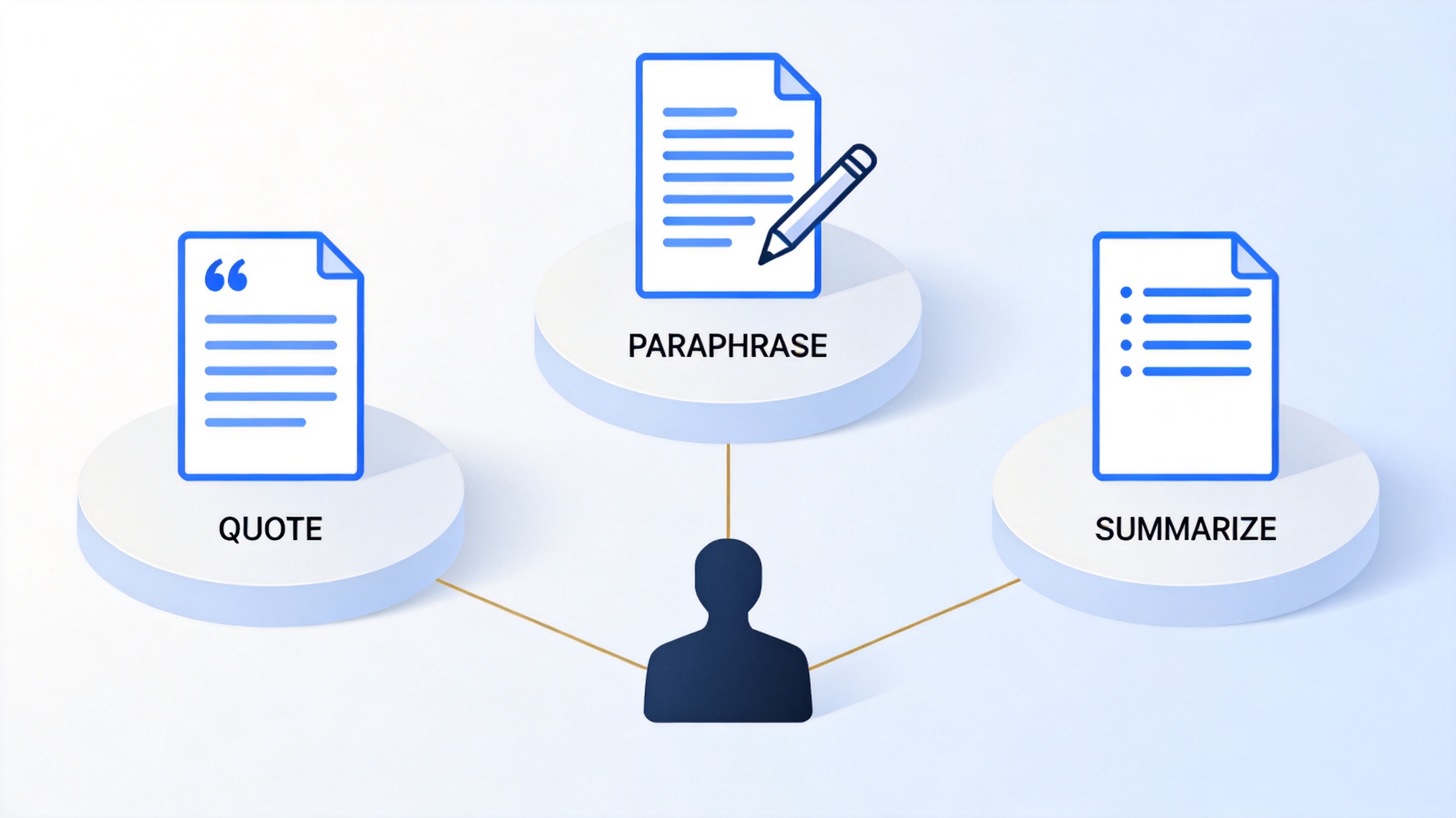
Paraphrasing is not the only way to reuse a source. A quote copies the exact words inside quotation marks—best when the original wording itself matters. A summary condenses a whole document into a few lines—best when you need the gist. A paraphrase sits between them: roughly the same length and detail as the original passage, but built from your vocabulary and syntax.
Paraphrasing versus quoting and summarizing


How to Paraphrase Correctly Step by Step
A clean paraphrase comes from separating understanding from writing. The sequence below takes a few minutes per passage and removes most of the risk of drifting wording.
Read the passage twice without taking notes. Make sure you could explain it out loud to a colleague before you write anything.
Note the key point in a few words of your own—just the claim, not the sentences that carry it.
Close or minimize the source so the original wording is out of sight.
Write the idea from memory in your own sentence structure. Aim for the same level of detail, not shorter and not padded.
Reopen the source and compare. Fix anything your version states differently, and rework any phrase that still matches the original too closely.
Cite the source. The idea still belongs to its author even after you have reworded it—paraphrasing without attribution is plagiarism.
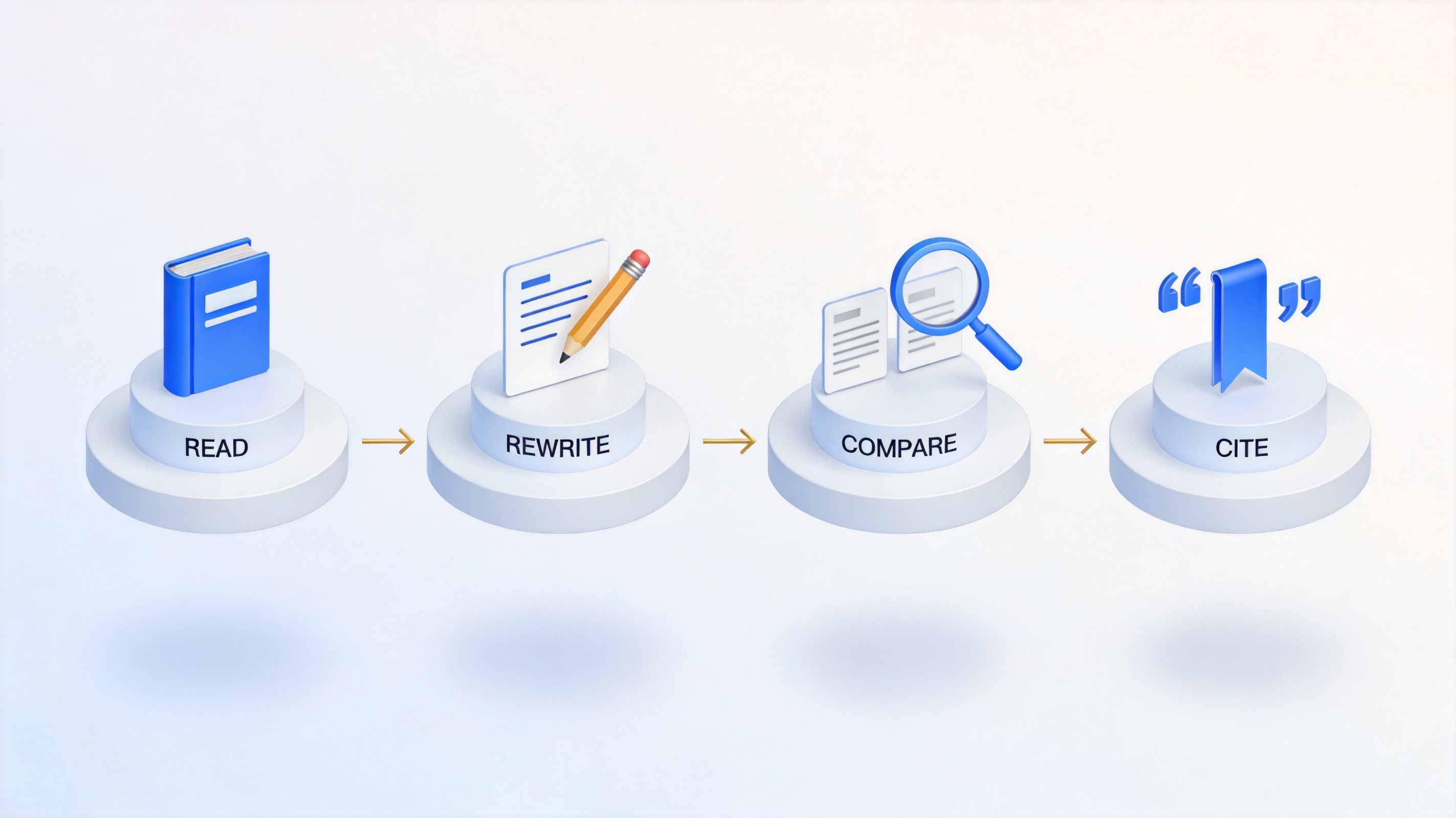
The diagram summarizes four phases—Read, Rewrite, Compare, and Cite. Follow the six steps above in order: steps 1–2 cover Read, steps 3–4 cover Rewrite, step 5 is Compare, and step 6 is Cite.
Read, rewrite, compare, and cite phases
Common Paraphrasing Mistakes to Avoid
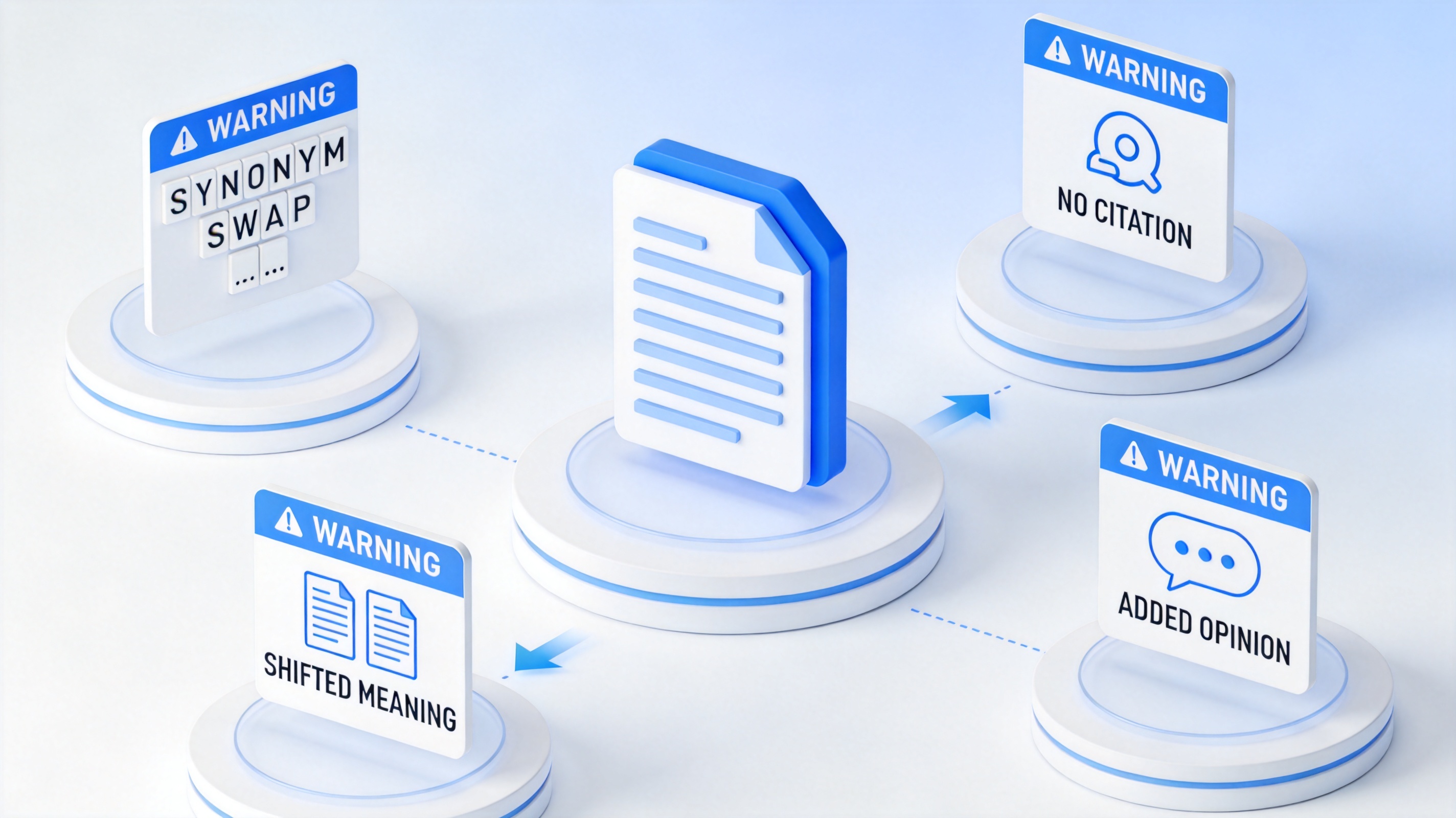
Most paraphrasing problems fall into four patterns, and each one has a quick fix.
Playing the synonym game. Swapping single words while keeping the original sentence structure produces text that plagiarism checkers and instructors flag immediately. Change the sentence skeleton instead: split long sentences, reorder clauses, or switch between active and passive voice where it sounds natural.
Paraphrasing before understanding. If you cannot restate the idea out loud, you are not ready to write it. Reread until the meaning is yours, then put the source away.
Adding your own opinion. A paraphrase must carry the author's claim, not an improved version of it. Keep your commentary in a separate sentence or paragraph, clearly in your own voice.
Dropping the citation. New wording does not create new ownership. Cite the source the same way you would after a direct quote.
For longer academic drafts where sources stack up, our essay rewriter guide covers how to rework a full essay without losing your own voice, and the plagiarism-free writing workflow pairs paraphrasing with the checks that catch close wording early.
Common paraphrasing mistakes writers should avoid
Paraphrasing Examples: Before and After
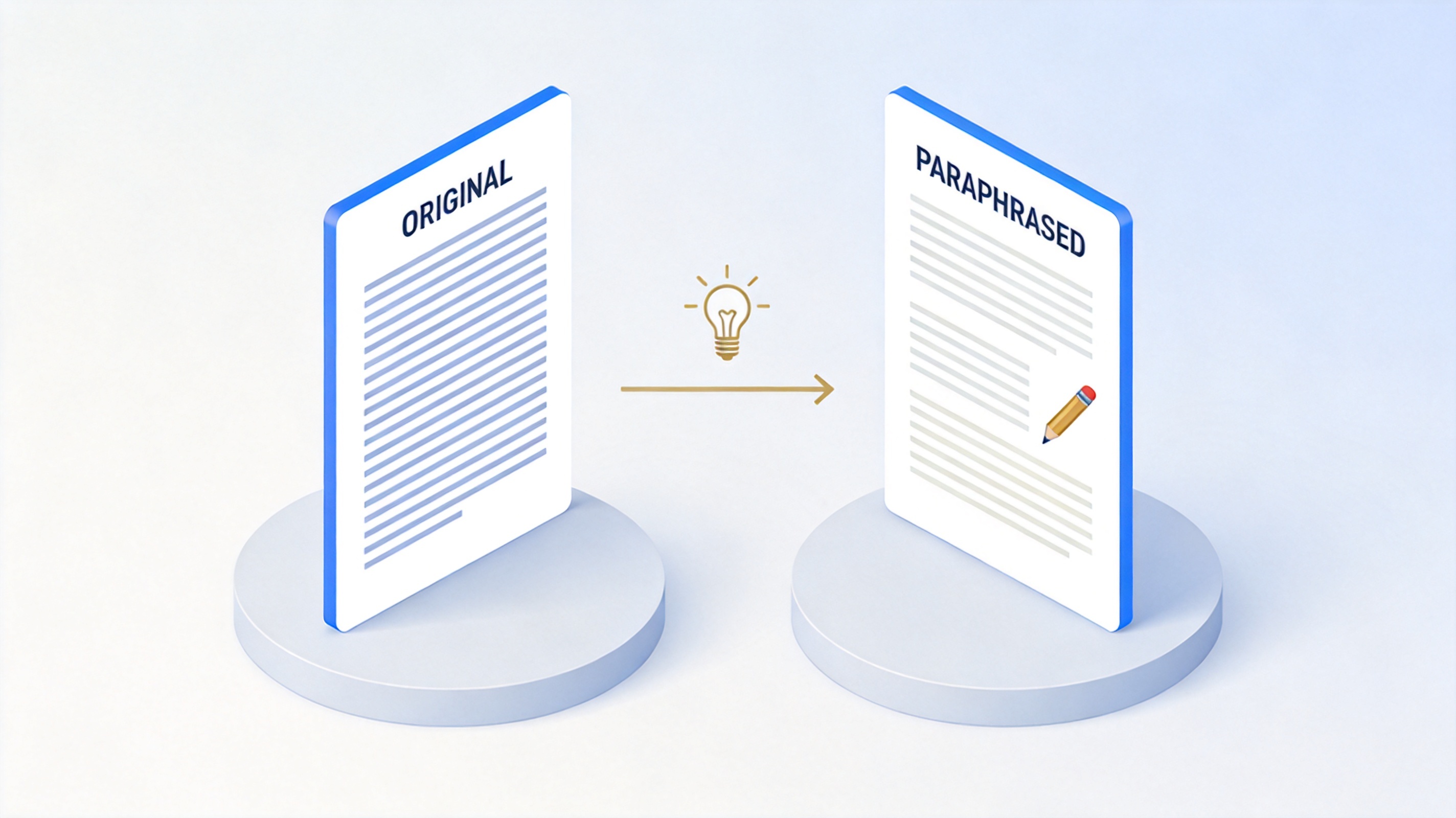
Seeing the difference on one sentence makes the method concrete. Here is an original claim, followed by a failed paraphrase and a correct one.
Original: Remote work has reduced employee burnout in many industries because workers control more of their daily schedule.
Too close (synonym game): Remote jobs have lowered worker exhaustion in many sectors because employees command more of their everyday timetable. The skeleton, rhythm, and logic of the sentence are identical—only the word choices moved.
Correct paraphrase: Burnout among employees tends to fall when companies let people work remotely, since the ability to shape one's own day is the main factor behind the improvement. The claim and its cause survive; the structure and wording are new, and the citation still points to the original source.
Use the same before-and-after check on your own drafts: write your paraphrase, then ask whether a reader could identify the source sentence at a glance. If yes, rework the structure before you cite.
Original sentence and paraphrased version compared
The Best Free Alternative: WPS Office
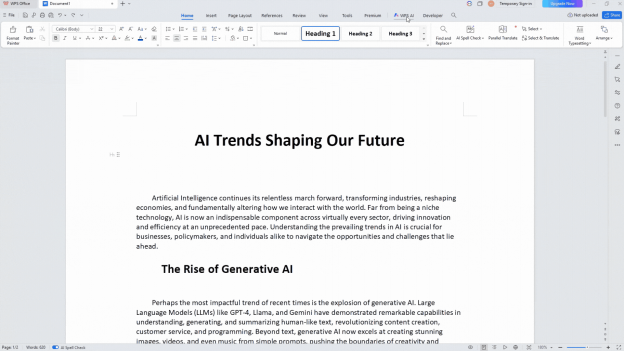
Paraphrasing usually happens inside a draft, so the tooling around it matters. WPS Office puts an AI writer toolkit directly in Writer: select a passage and use WPS AI to rephrase or polish it, adjust the tone, or summarize a long section—without copying the text into a separate browser tab and pasting it back.
Because the rewrite happens in the same document, your formatting, headings, and citations stay in place. Writer is free for personal use, opens and saves .docx files, and works on desktop, web, and mobile, so a paraphrasing pass can happen wherever the draft lives.
WPS AI writer paraphrasing and summarizing tools
FAQs
Is paraphrasing the same as plagiarizing?
No—paraphrasing with a citation is not plagiarism. Plagiarism happens when you reuse someone's idea without attribution, or when your "paraphrase" copies too much of the original wording. Change the structure, keep the meaning, and cite the source.
How close is too close to the original wording?
If your sentence keeps the same grammatical skeleton and only replaces individual words, it is too close. Cover the source, rewrite the idea from memory, and compare afterward—phrases you could not have produced without looking are usually lifted.
Do I still need to cite a paraphrase?
Yes. The idea still belongs to the original author even in new words. Every citation style—APA, MLA, Chicago—requires attribution for paraphrased passages, usually with a page reference for direct wording.
Can I paraphrase my own writing?
You can, and it is a common editing move: reworking your own sentences for tone, length, or clarity needs no citation. If the passage was already published elsewhere, follow the republishing rules of both outlets.
What is a simple example of paraphrasing?
Original: "Regular exercise improves sleep quality by reducing stress hormones." Paraphrase: "People who work out consistently tend to sleep better because physical activity lowers the hormones that interfere with rest." Same claim and cause, entirely different wording—plus a citation.


'%3e%3cpath%20d='M19.9911%204.11386V6.471H18.5894C18.0775%206.471%2017.7322%206.57814%2017.5536%206.79243C17.3751%207.00671%2017.2858%207.32814%2017.2858%207.75671V9.44421H19.9019L19.5536%2012.0871H17.2858V18.8639H14.5536V12.0871H12.2769V9.44421H14.5536V7.49779C14.5536%206.39064%2014.8632%205.53201%2015.4822%204.92189C16.1013%204.31177%2016.9257%204.00671%2017.9554%204.00671C18.8304%204.00671%2019.509%204.04243%2019.9911%204.11386Z'%20fill='%23333333'/%3e%3c/g%3e%3cdefs%3e%3cclipPath%20id='clip0_2938_8199'%3e%3crect%20width='16'%20height='16'%20fill='white'%20transform='translate(8%204.00671)'/%3e%3c/clipPath%3e%3c/defs%3e%3c/svg%3e)
'%3e%3cpath%20d='M17.5237%2010.7813L23.4811%204H22.0699L16.8949%209.88693L12.7648%204H8L14.2469%2012.9029L8%2020.0133H9.4112L14.8725%2013.7952L19.2352%2020.0133H24M9.92053%205.04213H12.0885L22.0688%2019.0224H19.9003'%20fill='%23333333'/%3e%3c/g%3e%3cdefs%3e%3cclipPath%20id='clip0_2938_8200'%3e%3crect%20width='16'%20height='16.0134'%20fill='white'%20transform='translate(8%204)'/%3e%3c/clipPath%3e%3c/defs%3e%3c/svg%3e)


