HTML to PDF Converter — URLs, Files & Code | WPS
Home / All Tools / PDF / HTML to PDF

HTML to PDF Converter

Create a PDF copy of a web page, a saved HTML file, or your own HTML code. Use WPS’s online HTML to PDF converter to adjust print settings and review the page layout before downloading a document.

or drag and drop files here

HTML

No source selected

Choose a URL, upload an HTML file, or paste HTML code.

Choose input source

Switch between a public web page, an uploaded .html file, or pasted HTML code.

Only public HTTP or HTTPS pages are supported. Internal, local, and login-protected pages are blocked.

Print settings

Control page size, orientation, margins, scale, render wait time, and optional headers or footers.

Choose the output paper format.
Rotate the page layout before printing.
sec
Maximum 30 seconds before the render times out.
mm
Applied to all printed pages.
mm
Used for both left and right sides.
mm
Keeps footer content visible.
%
Adjust overall print zoom.
Shown at the top of each page if enabled.
Shown at the bottom of each page if enabled.

Print background graphics

Include background colors and images from the original page.

This page may require sign-in or block automated rendering. If conversion fails, try a public page or paste the HTML code directly.
Ready to convert to PDF.

PDF preview

Review the generated document, then download the PDF file.

Your PDF preview will appear here after conversion.
File name
File size
Page count
Source
Free to Use
No Sign-Up
No Ads
Any Browser

How to Convert HTML to PDF in 3 Steps

01

Step 1: Choose your HTML source

Enter a page URL, upload an .html file, or paste HTML code. Use content you are authorized to access and check that its required assets are available.
02

Step 2: Adjust the print settings

Set paper size, orientation, margins, and scale. Choose background printing and optional headers, footers, or page numbers as needed.
03

Step 3: Convert and inspect the pages

Convert HTML to PDF and review the paginated preview. Check images, fonts, and page breaks before downloading the result.

Convert a URL, HTML File, or Code to PDF

Web content can arrive as a link, a local file, or a code snippet. WPS’s HTML to PDF converter accepts all three input types, so you can start from the form you have. URL conversion requires the source page to be accessible.

Try It Now
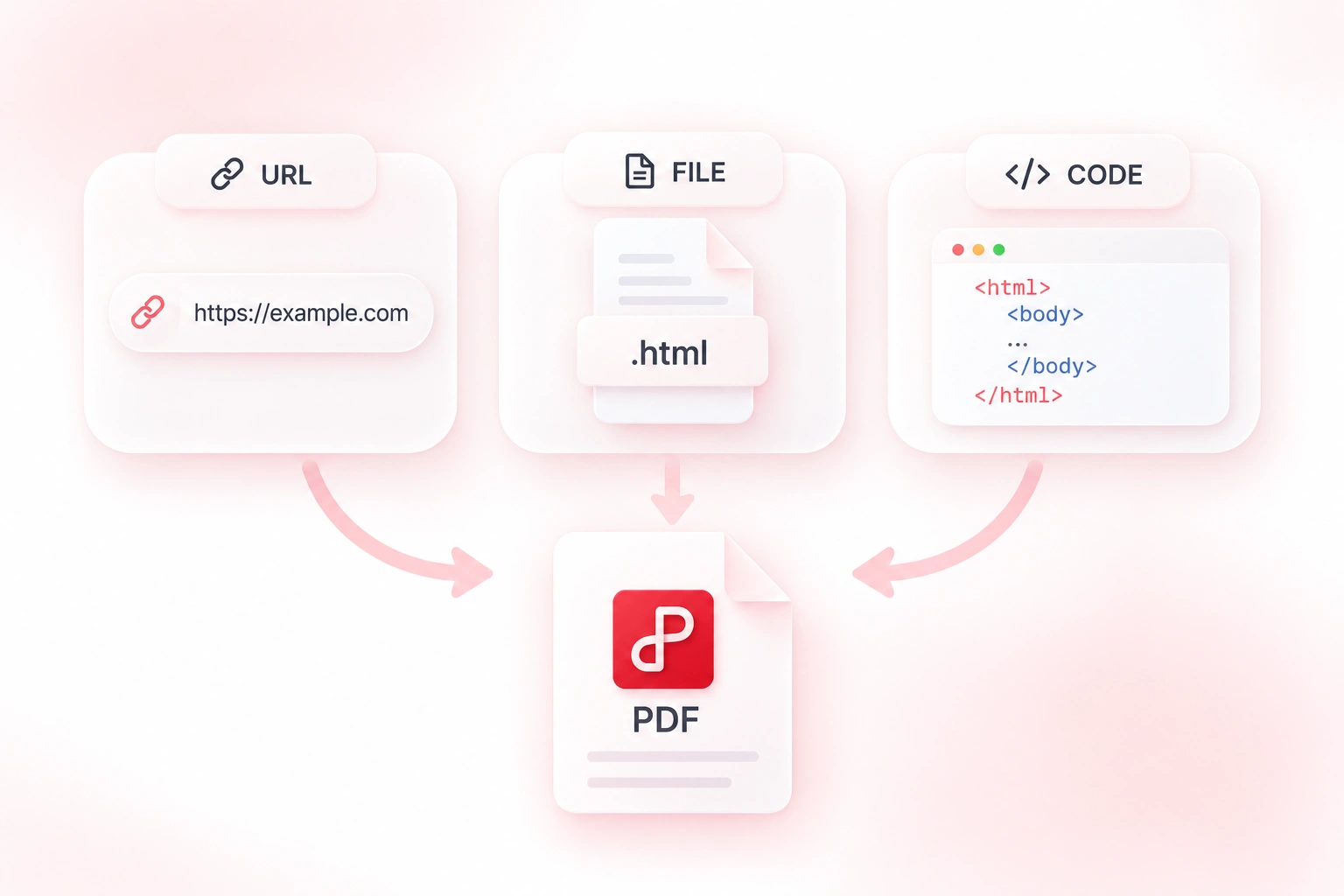
URL, HTML file, and HTML code inputs converted to a PDF document

Fit Web Page Content to a PDF Layout

A web layout does not always fit a printed sheet. Paper size, margins, orientation, and scale controls let you adjust the PDF layout, so you can make deliberate choices about whitespace and page width. Review page breaks after changing the settings.

Try It Now
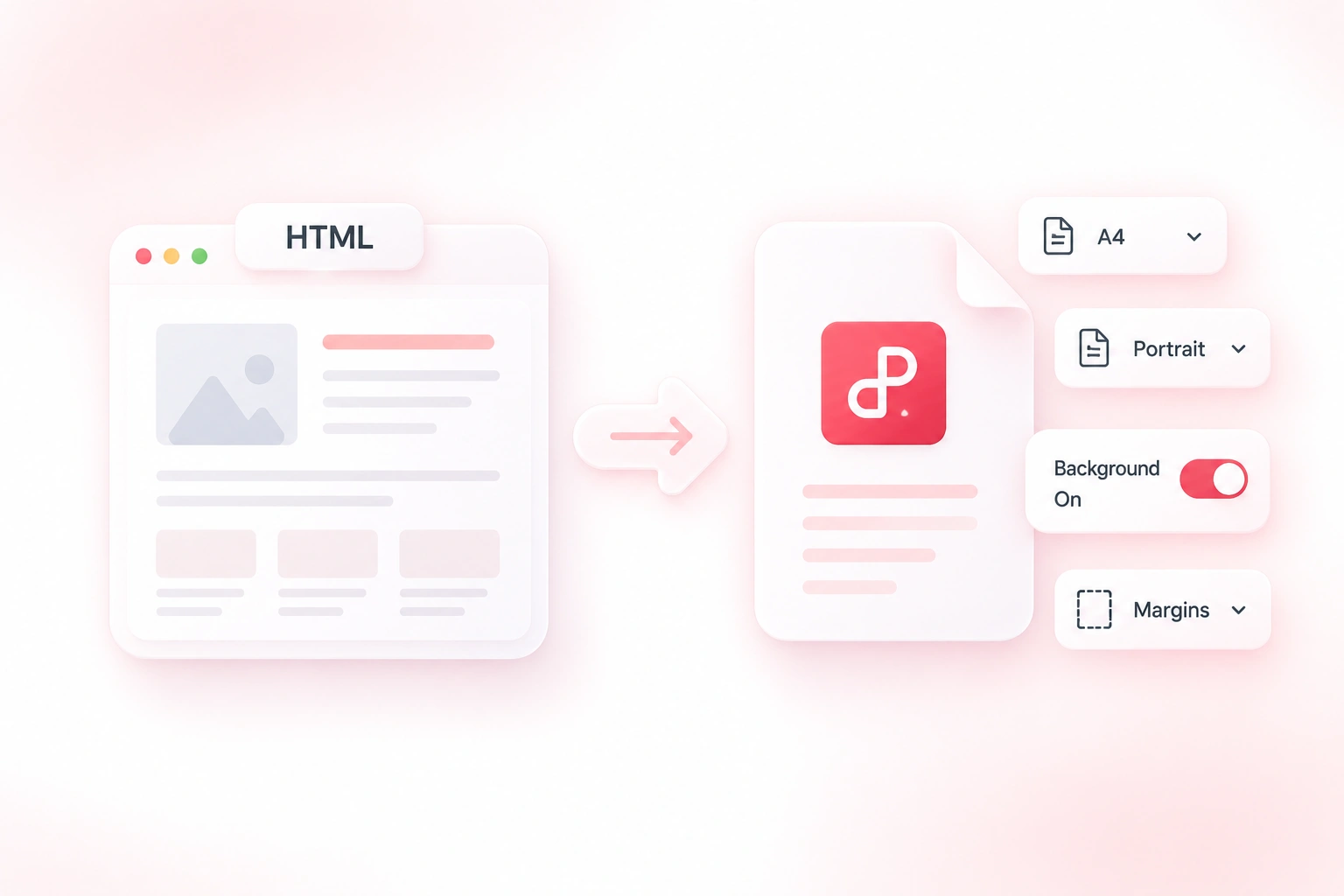
HTML page converted to PDF with A4, portrait, background, and margin settings

Add PDF Headers, Footers, and Page Numbers

A multi-page web export can lose context away from the browser. Optional headers, footers, and page numbers let you add document cues, so readers can keep track of the pages. Check that these additions do not crowd the source content.

Try It Now
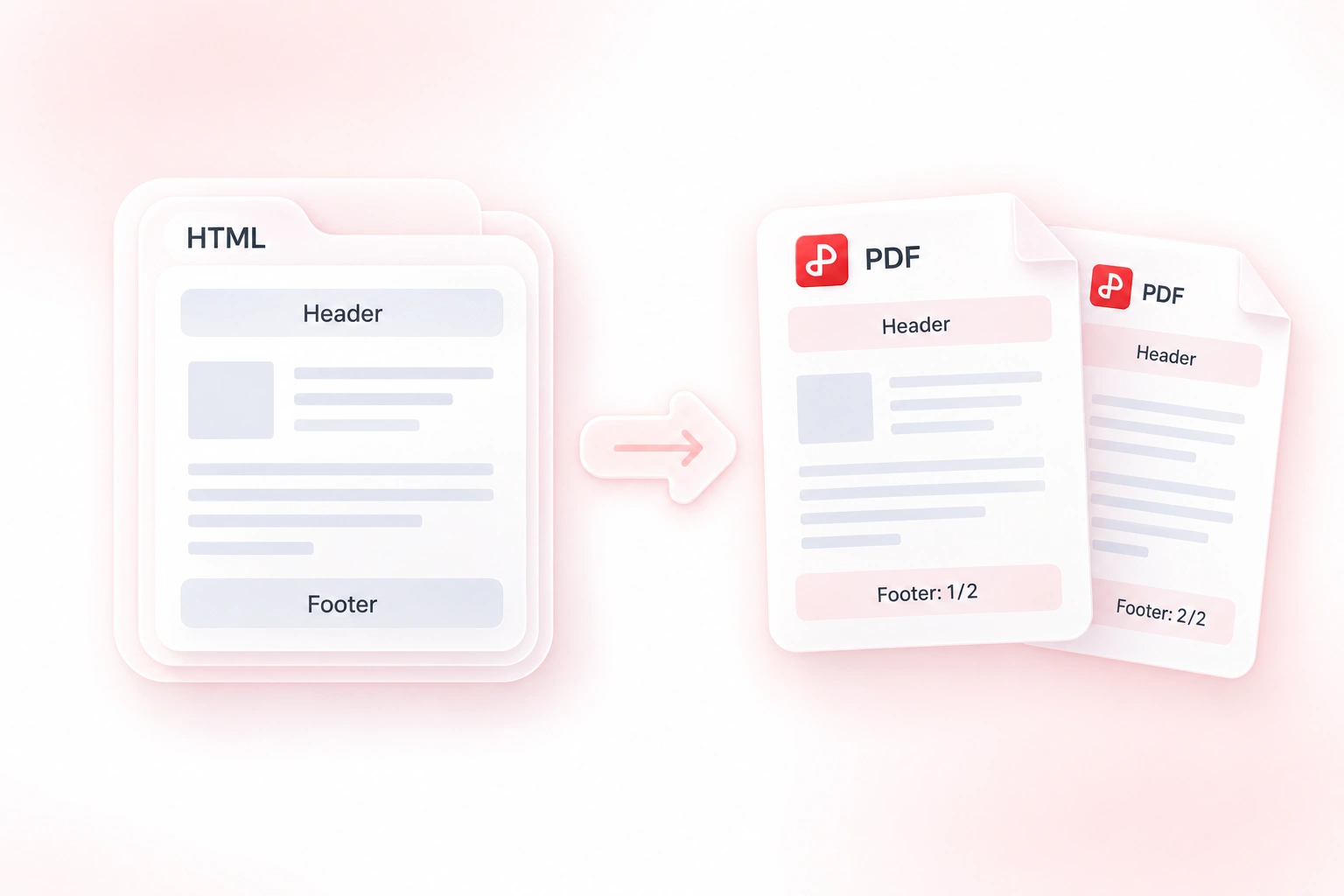
HTML pages converted to PDF with headers, footers, and page numbering

Preview HTML to PDF Page Breaks and Images

Missing images or awkward breaks can be easy to miss in a web view. The paginated PDF preview shows the converted result, so you can inspect the actual document before sharing it. Login restrictions and unavailable external assets still need to be resolved at the source.

Try It Now
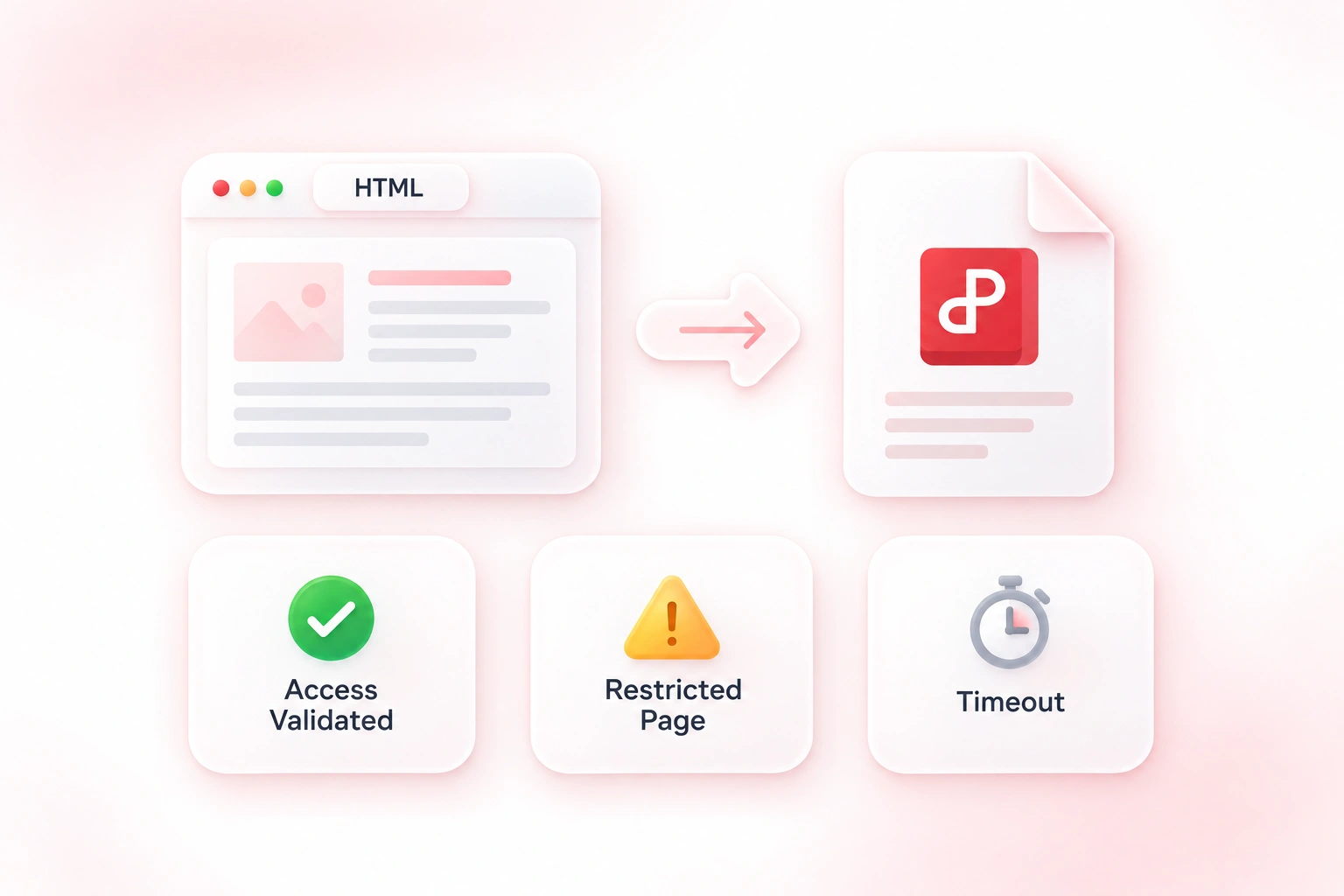
HTML to PDF conversion showing validated access, restricted page, and timeout states

Why Users Choose Our HTML to PDF Converter

Flexible URL, file, or code input, practical page settings, and previews for document workflows.

Use a web page to PDF workflow to keep a readable reference copy. Record the source URL separately when the page may change later.

Public page reference

Research and documentation

Convert an HTML file to PDF for a handout. Check local image paths and fonts before exporting, then inspect each page.

Saved HTML handout

Training preparation

Convert HTML code to PDF to review a draft as paginated content. Review headers, backgrounds, and page breaks before sharing the file.

Code-based layout review

Web content teams

Explore More Tools with WPS

View All Tools →

HTML to PDF
FAQ

Answers about input files, conversion settings, and the results to review.

01

Choose URL, file, or code input, add your source, and adjust the print settings. Run conversion and inspect the paginated PDF before downloading.
02

Do not assume a converter can access content behind a login or a private network. Use an authorized, accessible source and review any access warning shown by the tool.
03

Yes. Upload an .html file using the file input. Images, styles, or fonts referenced outside the file need to be available for the intended appearance.
04

A PDF export is a static document. Do not expect website scripts, animation, interactive forms, or application behavior to work as they do on the original web page.
05

Print layout and source assets affect the result. Check whether images and fonts are accessible, then review paper size, margins, scale, and background-printing settings.
06

Yes. The tool includes optional headers, footers, and page numbers. Review their placement in the preview, especially when the source content already includes page furniture.

Free Online Tools by WPS Office

Get WPS Office